1

Google
Japanese•Brickell•value
MILA
MILA is one of the better-known japanese spots in Brickell in Miami, which makes it a practical place to start.
Work lunchlunchbright
Read restaurant page
9.6
Best overall for japanese
8 Japanese restaurants in Miami worth planning around, from MILA to OMAKAI sushi, with standout orders and options for different budgets.
The best japanese restaurants in Miami are MILA, OMAKAI sushi, OMAKAI hand roll bar, and more. Start with MILA if you want the strongest fit for best overall for japanese.

MILA, OMAKAI sushi, and OMAKAI hand roll bar lead this Miami guide to Japanese restaurants. Look for OMA Deluxe Appetizer, Seabass Baked and Marinated, and OMA Bite among the standout orders. The list reaches across Brickell, Wynwood, and Bal Harbour, with a different reason to choose each restaurant.


We looked for restaurants that feel like a strong fit for the guide topic, not just the most obvious names in the city. The shortlist favors rooms with clear mood, dependable pacing, and enough distinction to help someone decide faster. Read our full methodology →
Lighting, pace, and general energy all need to support the reason someone clicked this guide.
We favored restaurants that feel best suited for the moment, not just restaurants with broad reputation.
The final list tries to give readers enough variation in neighborhood, price, and style to compare real options.
MILA is one of the better-known japanese spots in Brickell in Miami, which makes it a practical place to start.
Read restaurant page
OMAKAI arrived in Wynwood in 2019 with a premise Miami's dining scene had left conspicuously unfilled: structured omakase at a price point that doesn't demand a special occasion to justify the cheque. The founding team — Diego and Pedro Quijada alongside Nicolas Sayavedra — built the room around Chef Aaron Pate, whose résumé spans nearly three decades working in Hawaii and Tokyo. That background matters, because omakase lives or dies on the discipline behind it, and Pate's training suggests the format here is earnest rather than borrowed for atmosphere.
The OMAKAI Experience proceeds through a multi-course progression of appetizers, sashimi, nigiri, and hand rolls with enough structure to register as ceremonial. The OMA Deluxe Appetizer is understood to anchor the opening sequence, setting the register before the kitchen's more pointed statements arrive. Those come in the form of the Wagyu A5 Nigiri and the O-Toro, Uni, and Caviar Specialty Nigiri — the dishes diners consistently identify as the clearest measure of what this kitchen is attempting. Both center on premium ingredients whose quality is either evident or it isn't; there is little middle ground at that specification level. The Maine Lobster Hand Roll rounds out the progression, and the reported practice of refreshing nori every fifteen minutes is the kind of operational detail that signals genuine process rather than marketing language.

OMAKAI arrived in Wynwood in 2019 with a premise Miami's dining scene had left conspicuously unfilled: structured omakase at a price point that doesn't demand a special occasion to justify the cheque.
Read restaurant page
OMAKAI Hand Roll Bar launched in Brickell as Miami's first dedicated hand roll bar, a distinction the Quijada brothers and Chef Aaron Pate have anchored in a space of under a thousand square feet and twenty-seven counter seats. No tables, no reservations, no escalating parade of courses — the concept strips the format to its essentials, placing the emphasis squarely on what is happening at the counter in front of you. That compression is either a strength or an exposure, depending entirely on whether the kitchen holds its standards under pressure.
The menu centers on the OMA Deluxe — five hand rolls built on warm rice, a specification that matters more than it might initially appear. Warm rice is the baseline expectation at serious hand roll bars in Tokyo and Los Angeles, and its presence here signals that the kitchen understands what separates the format done correctly from the format done conveniently. Beyond the OMA Deluxe, the Maine Lobster Hand Roll and the Wagyu Yukke are the dishes diners and observers consistently point to as evidence of the kitchen's ambitions at the ingredient level. Lobster and wagyu in a counter format are not hedges — they are commitments to sourcing that the price point has to justify, and at price level three, those commitments are reportedly what the room is being judged against.

OMAKAI Hand Roll Bar launched in Brickell as Miami's first dedicated hand roll bar, a distinction the Quijada brothers and Chef Aaron Pate have anchored in a space of under a thousand square feet and twenty-seven counter seats.
Read restaurant page
Now on iPhone + Android
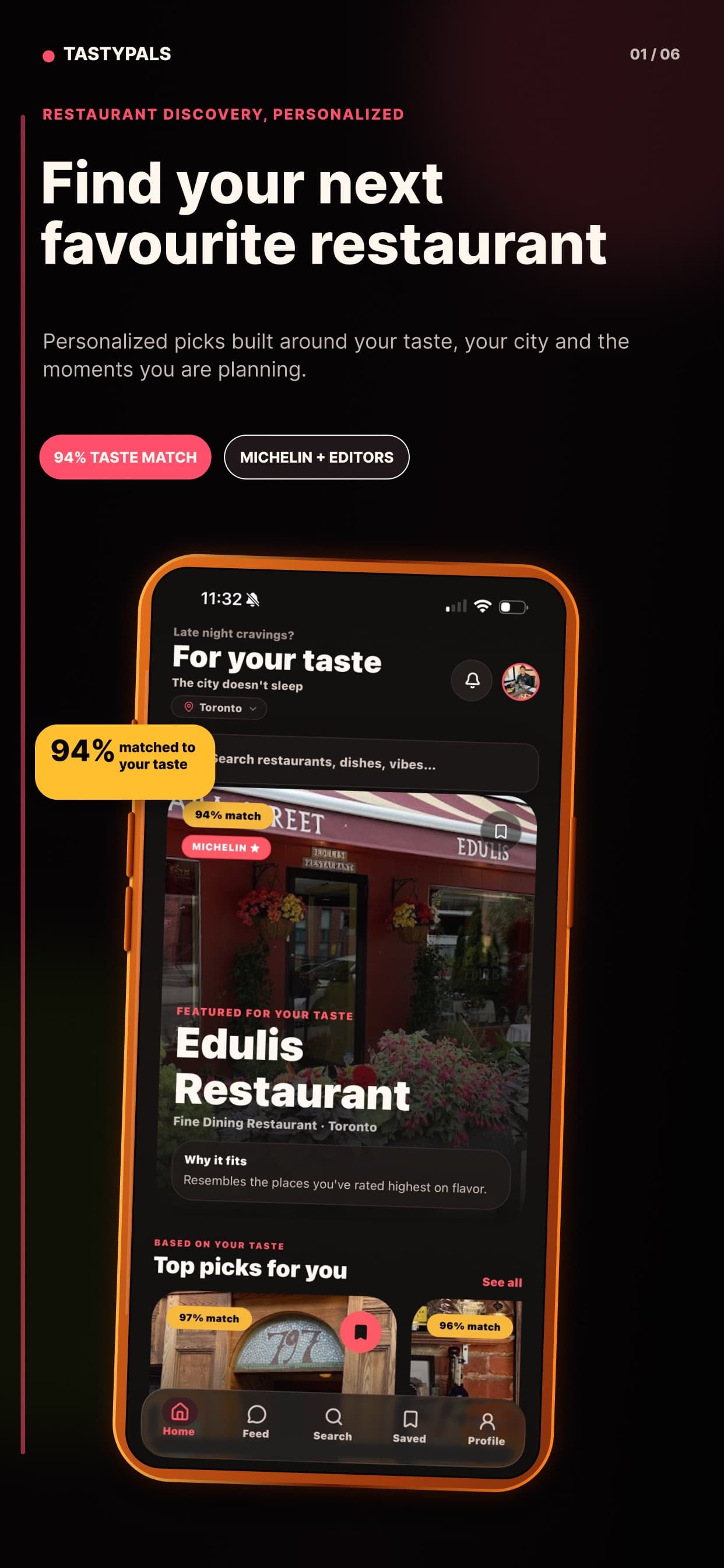
Keep the shortlist handy in the TastyPals app and find similar restaurants across Miami.


Wynwood has spent a decade getting the aesthetic right and fumbling the food — rooms where the mural outside carries more intention than anything on the plate. Shiso reads, by reputation, as the correction. The kitchen operates around a specific argument: that Japanese technique and contemporary Miami instincts are not competing impulses but the same conversation. At a price point that sits well below what comparable ambition typically demands, the room reportedly draws a crowd that ranges from people who know exactly what A5 means to tables of friends who are about to learn — and that spectrum feels deliberate rather than accidental.
The five dishes worth anchoring your order around have each developed consistent reputations. The A5 Carpaccio is where the kitchen apparently makes its clearest statement — serving Wagyu at that grade raw and thin is a confidence move, a cut that leaves no room for technique to compensate for ingredient. The Stracciatella is known as the ideal counterpoint, milky and bright, built around acidity. The Smoked Chicken Lollipop is the dish diners consistently flag as the crowd-pleaser that actually earns the label — the smoke reportedly registers as depth rather than surface. The Chilean Sea Bass is the reliable protein on the menu, described as properly rendered without feeling like a concession. The Uni Rice is the dish people apparently describe to someone else the following morning — briny and rich in a way that reframes everything simpler around it.

Wynwood has spent a decade getting the aesthetic right and fumbling the food — rooms where the mural outside carries more intention than anything on the plate.
Read restaurant page
Sexy Fish Miami lands in Brickell — one of the most aggressively corporate dining corridors in South Florida — and reportedly refuses to play by those rules. The London original built its name on theatrical design and serious fish cookery, and by most accounts the Miami outpost carries that DNA without apology. This is not a room designed for quiet Tuesday business dinners. It's the kind of place that seems to perform for you rather than the other way around, and what's notable is that the kitchen is consistently said to keep pace with the spectacle — which is genuinely rare at this price level.
The menu sits at an interesting crossroads: Japanese technique, Asian-inflected seafood, and the occasional red-meat flex. The Guacamole Nori Chips are a frequently cited standout — a familiar flavor profile translated into something reportedly hard to stop eating. The Salt & Pepper Squid and Prawn Gyoza anchor the smaller plates and diners consistently point to both as reasons to start there before moving on. For proteins, the Salmon Teriyaki is a recurring recommendation among regulars, and the USDA Prime Skirt Steak is known for outperforming expectations in a neighborhood full of steakhouses that charge twice the price for less interesting results.

Sexy Fish Miami lands in Brickell — one of the most aggressively corporate dining corridors in South Florida — and reportedly refuses to play by those rules.
Read restaurant page
Makoto sits on the third floor of Bal Harbour Shops, recently reworked by Paris designer India Mahdavi into something brighter and bolder — colour-saturated banquettes, an expanded sushi counter, more room to breathe outdoors. The question with a setting this glossy is always whether the kitchen earns the address, and here it largely does. Chef Makoto Okuwa, a James Beard Outstanding Contribution honoree and Edomae-trained sushi master, has built a menu around pristine raw fish, premium beef, and charcoal robata.
The toro sashimi is the proper measure of his hand — clean, precise, unfussed. The serrano chili tuna crispy rice has earned its reputation, and the miso sea bass delivers the comfort the room's polish promises. Reckon on $50–100 per head at dinner, which positions this firmly as occasion dining rather than a casual sushi stop.

Makoto sits on the third floor of Bal Harbour Shops, recently reworked by Paris designer India Mahdavi into something brighter and bolder — colour-saturated banquettes, an expanded sushi counter, more room to breathe outdoors.
Read restaurant page
Mykonos Kitchen and Bar suits a night out in Sunny Isles when you want japanese that feels grown-up without getting stiff.
Read restaurant page
A hundred years in the Hollywood Hills, and Yamashiro chose Miami for its first move east — which tells you something about the room's ambitions before you've even booked a table. Spread across 9,000 square feet of rooftop at the Gale Hotel, the space is built around reclaimed wood, unpolished stone, fire pits, and bonsai trees, and by all accounts the whole thing holds together the way a considered outfit does: studied without being stiff. What photography and consistent reporting make clear is that the light is the point. Miami at dusk through a rooftop frame, with the city beginning its slow iridescent shift, appears to be exactly the backdrop that Chef Charbel Hayek — Top Chef MENA champion — and executive chef Gustavo Montes have built the pacing around. This is a room that, by design and by reputation, makes an occasion feel like the opening scene of something larger.
The kitchen operates at the declared intersection of Japanese discipline and Miami's instinct for spectacle, and the menu reflects that tension intentionally. The Hamachi Tataki is consistently described as the more precise, restrained end of the card — acid-forward, clean. The Spicy Tuna Crispy Rice is reportedly the dish diners return for, the contrast of temperature and texture generating the kind of loyalty that turns a single order into a standing habit. King Crab reads as the room at its most generous — a showpiece in format and scale. The Striploin A5 Japanese Wagyu anchors the meat side of the menu with the weight that grade commands, and is frequently cited as a benchmark order.

A hundred years in the Hollywood Hills, and Yamashiro chose Miami for its first move east — which tells you something about the room's ambitions before you've even booked a table.
Read restaurant page
TastyPals for iPhone + Android
Save these spots to your Miami list in the TastyPals app, then explore similar restaurants when you want a tighter shortlist for the night.