
20 Best Cheap Eats in Toronto
The best cheap eats in Toronto — Liuyishou Hotpot Scarborough, Haidilao Hot Pot Toronto Downtown, The Burger Monk (Flame Grilled), and Machida Shoten (College St) and 16 more, reviewed by TastyPals editors.
The best cheap eats in Toronto are Liuyishou Hotpot Scarborough, Haidilao Hot Pot Toronto Downtown, The Burger Monk (Flame Grilled), and more. Start with Liuyishou Hotpot Scarborough if you want the strongest overall first pick.
How we picked: We weight quality-per-dollar, depth of the cooking, and whether the place would be in the guide even if it cost more.

Top picks at a glance
Practical notes
What to plan for before you book — spend, reservation strategy, and who should skip this guide entirely.
- Expected spend
- $10–25 per person across these picks. A few will land closer to $15 with a drink.
- Booking strategy
- Most of these are walk-in. Arrive a few minutes before service or right at open for the shortest wait. Cash-friendly is common at counter spots.
- Where to look
- Concentration of cheap-eats picks is strongest in Toronto, Scarborough, Gerrard India Bazaar — plan a multi-stop tasting if you're new to the city.
- Skip if
- you want a long sit-down meal with drinks and service. Cheap-eats culture is about the food, not the room.
Who this guide is for
The best cheap eats in Toronto don't ask you to compromise. Kensington Market, Chinatown, and Little Portugal punch well above their price point — the best cheap eats here tend to be from immigrant-owned kitchens with real depth. These picks are sorted by quality and review volume, not price alone — spots that happen to be affordable and still worth the trip. Picks span Scarborough, East Chinatown and Toronto.
Quick picks
On this page
- 1. Liuyishou Hotpot ScarboroughView →
- 2. Haidilao Hot Pot Toronto DowntownView →
- 3. The Burger Monk (Flame Grilled)View →
- 4. Machida Shoten (College St)View →
- 5. Mangal Kebab HouseView →
- 6. Leela Indian Food Bar (GERRARD) Best Indian Restaurant TorontoView →
- 7. Angara Indian and Hakka CuisineView →
- 8. Dil Se Indian Restaurant & BarView →
- 9. Mapo Korean BBQView →
- 10. Gyodong RestaurantView →
- 11. L’AvenueView →
- 12. Dil Tak Indian Cuisine and BarView →
- 13. Lebanese GardenView →
- 14. Laylak Lebanese Cuisine TorontoView →
- 15. Antler Kitchen & BarView →
- 16. Nian Yi Kuai ZiView →
- 17. KreamView →
- 18. Madras CurryView →
How the restaurants compare


How we chose
We looked for restaurants that feel like a strong fit for the guide topic, not just the most obvious names in the city. The shortlist favors rooms with clear mood, dependable pacing, and enough distinction to help someone decide faster. Read our full methodology →
Lighting, pace, and general energy all need to support the reason someone clicked this guide.
We favored restaurants that feel best suited for the moment, not just restaurants with broad reputation.
The final list tries to give readers enough variation in neighborhood, price, and style to compare real options.
18 ranked picks
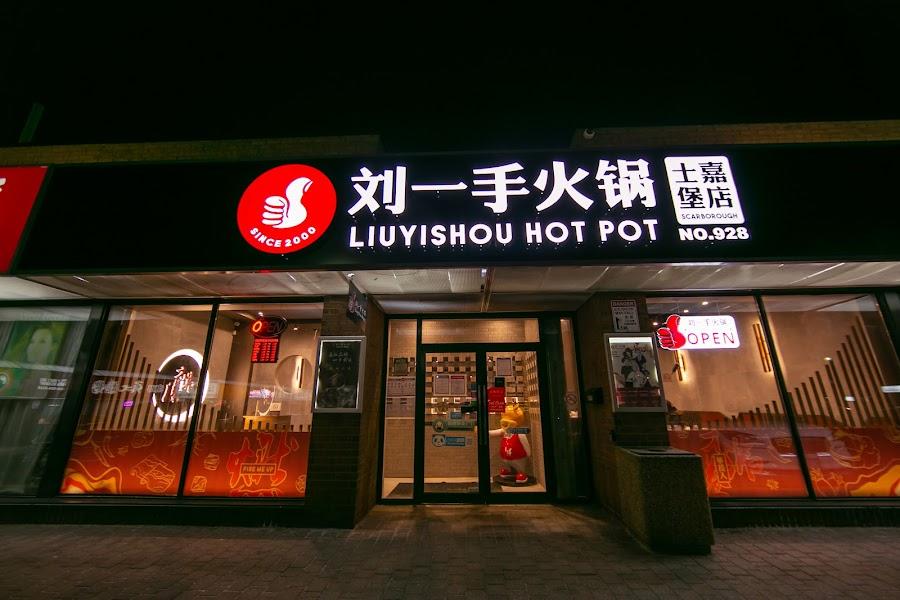
Liuyishou Hotpot Scarborough is not trying to charm you with atmosphere or seduce you with a tasting menu — it is a full-throttle Chongqing-style hotpot house doing exactly what its thousand-plus global locations were engineered to do: anchor a loud, communal, broth-forward meal where the table does the cooking and the sauce station handles the finishing. This is the restaurant for the twelve-top birthday dinner on Finch Avenue East, for the group that has spent forty minutes arguing about where to go and needs a format that ends the debate. A private room exists, and groups of eight or more should book it — by most accounts it shifts the entire tone of the evening. The infrastructure here is built for volume, for sharing, for staying two hours, and that is precisely what quieter competitors tend to miss.
The broth program is the actual story. Tom yum and Malaysian laksa options sit alongside the expected Sichuan red, which signals that this kitchen is calibrating for Scarborough's genuinely eclectic palate rather than committing to a single numbing-spice lane. Vegetable broth is reportedly available for tables that need to split the difference. The wagyu beef cake is the menu's table flex — known for its presentation as much as its quality, it arrives as a statement before it becomes dinner. Beef balls are consistently cited by diners as the real thing: the kind with a satisfying snap rather than a frozen-aisle approximation. Potted shrimps are said to offer a more delicate counterpoint once the chili oil begins accumulating in the pot. The dipping sauce station — crushed chilies, fresh garlic, sesame paste, rotating hot sauces — is where, by all accounts, a meal at Liuyishou actually gets its identity.
Go earlier in the week if you want breathing room. The value at this price point for a full hotpot spread in Scarborough is genuinely hard to argue with. Your move: build a split broth pot with laksa and Sichuan red, spend real time at the sauce station, and let the beef balls and wagyu cake anchor the protein side of the table.
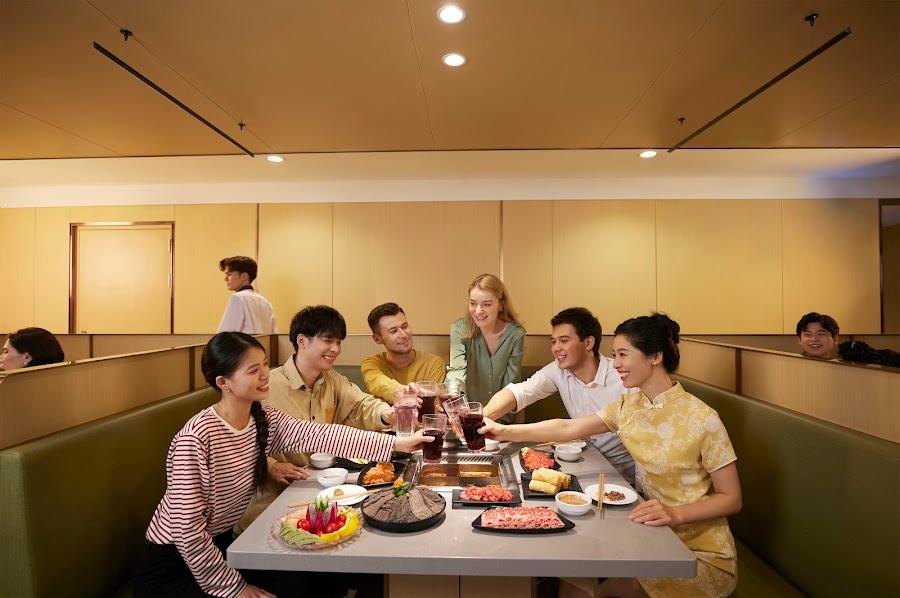
Haidilao's downtown Toronto location at 237 Yonge operates at a scale that makes most North American hotpot spots look tentative. Reportedly the largest Haidilao in North America, it leans into that ambition structurally: the signature quadruple-compartment soup base pot gives four distinct cooking sections, which means a table of twelve can run a laksa alongside a spicy mala without anyone conceding their preferred broth. That configuration is the whole pitch for large, fractious groups — bachelorettes, extended families, the friend circle where dietary preferences run in four different directions. The restaurant is built around that dynamic and, by all accounts, handles it without flinching.
The laksa broth is consistently cited by regulars as the anchor order — rich and deeply aromatic, reportedly avoiding the heaviness that can make a long-running broth feel oppressive as the evening stretches on. The hand-pulled Haidilao Styled Noodles are produced tableside in a live demonstration, and their appeal is straightforward: fresh-pulled noodles carry a structural chew that dried or pre-cut versions simply don't replicate in a rolling broth. Fine marbled beef slices and fine marbled lamb slices are the protein workhorses; the marbling is functionally important here, not decorative — fat distribution through thin-cut protein extends the window before overcooking in a hot boil. The deep fried buns with sweetened condensed milk close things out as a dessert that diners consistently report fighting over, which says something about a dish that reads, on paper, like an afterthought.
Practical priorities: build your sauce bar combination before the broth starts moving, not mid-chaos. Weekend waits run long — the location offers a manicure service during the queue, which is either the best or second-best reason to arrive early. Request seating with sightlines to the noodle-pulling and face-change performance; the theatrical programming is integrated into the experience here. For any group of four or more, the quadruple-base pot is the only configuration worth booking around.
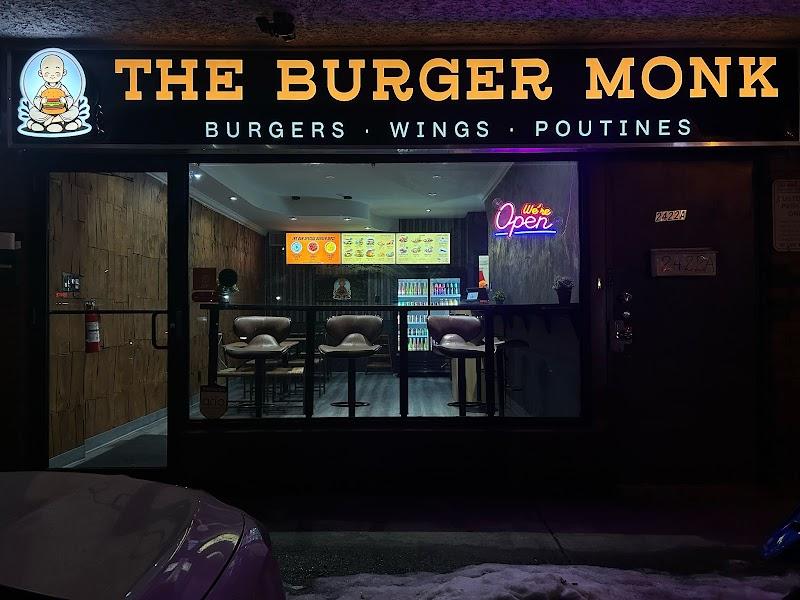
Most burger spots in Toronto have gone all-in on the smash patty, so The Burger Monk's commitment to flame-grilling is a genuine differentiator — and, according to consistent reporting on the place, the point of the whole operation. Stationed on a St. Clair West corner, it runs improbably late into the night, which puts it in rare company as a post-midnight option in the west end. The patties are sourced entirely from Canadian beef, and the kitchen's whole argument is that the open flame delivers a char-grilled quality that the flat-top crowd has collectively agreed to give up.
The flame-grilled beef burger is the anchor, and most accounts treat it as the right place to start. But what keeps The Burger Monk in regular rotation for people, based on what diners report back, is the range around it. The crispy chicken burger is consistently flagged as a genuine contender rather than an obligatory menu entry. Wings come with a real roster of sauces rather than a token choice. And then there's the cheesesteak poutine — which, by all accounts, is the kind of loaded poutine that doesn't need to be a side order to justify itself. It's reportedly the dish that turns first-timers into regulars on its own.
Practically speaking, this is the kind of place where the late-night reality matters as much as the menu. If you're in the west end past midnight and want something beyond fast food, the options narrow fast — and The Burger Monk is specifically built for that window. Come with the flame-grilled burger as your anchor, and plan to add the cheesesteak poutine regardless of whatever else you order.
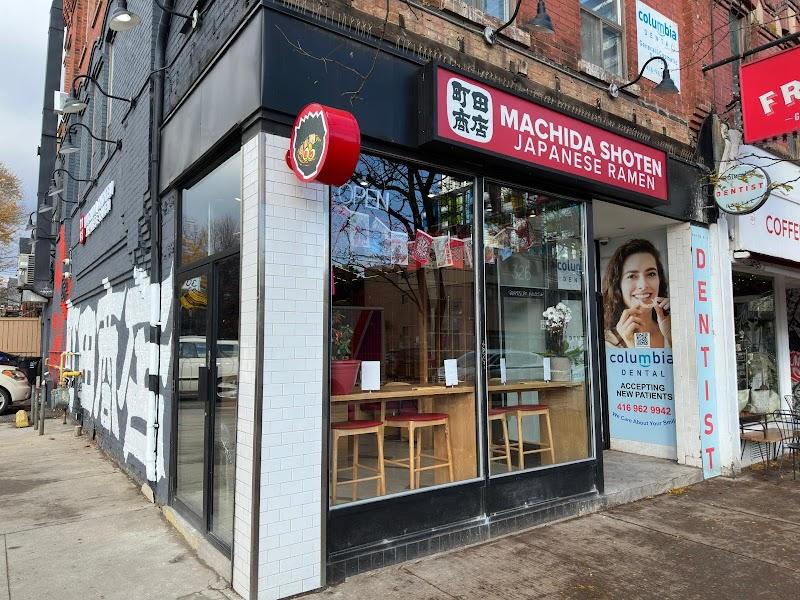
Machida Shoten on College Street carries a straightforward but significant distinction: it is Canada's first Yokohama Iekei ramen shop, which alone explains why it has accumulated more than a thousand reviews at a near-perfect rating in what appears to be a relatively short run. Iekei is a style that most Toronto ramen eaters have not encountered — a Yokohama-origin hybrid that fuses tonkotsu's pork-bone base with a shoyu tare and a layer of chicken oil, producing a broth that is reported to read closer to a sauce than a soup. That specificity of style, rather than novelty for its own sake, is what the restaurant's reputation is built on.
The menu centers on the Iekei tonkotsu-shoyu ramen, and the kitchen's approach follows the customization protocol of the original Japanese format: diners specify noodle firmness, broth richness, and oil level at the point of ordering. The medium-thick straight noodles are made in-house and are reportedly formulated to hold up under a broth of this weight. The flame-kissed chashu is a consistent point of mention across reviews — the char at the edges appears to be a deliberate textural and flavour contrast to the richness of the bowl. The rice finish is presented not as a side but as the intended conclusion: mixed into the remaining broth at the bottom of the bowl, which is the traditional Iekei way to close the meal. Diners who skip it are, by most accounts, leaving the intended experience incomplete.
This is a counter suited to solo visits or pairs rather than larger groups. The bowl is rich, salty, and heavy by design — a style to commit to rather than sample cautiously. The practical approach: order the standard Iekei bowl, calibrate richness and oil to your preference, and hold the rice for the end.
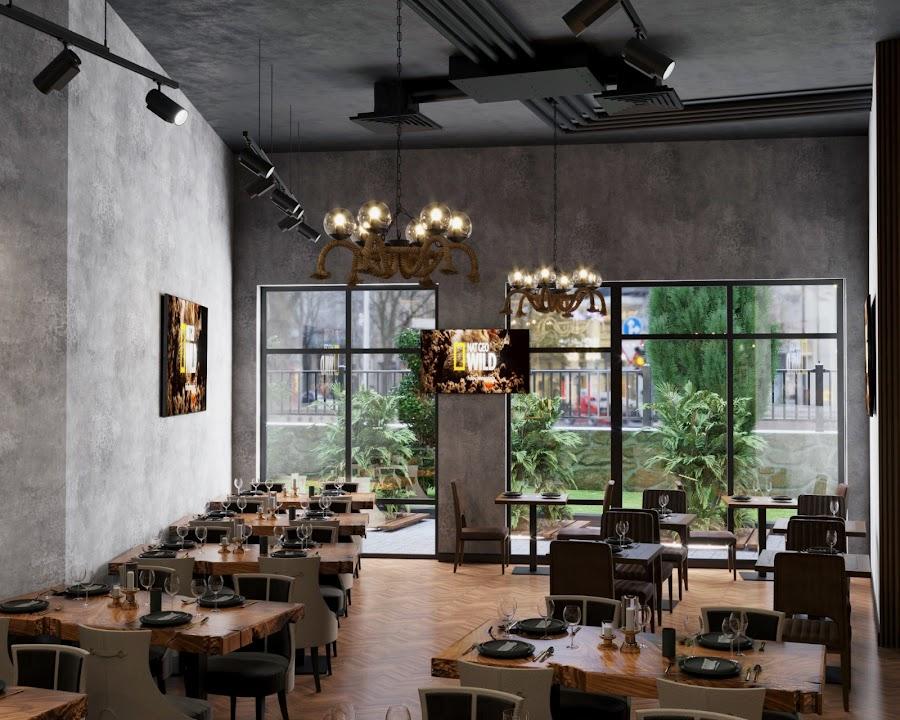
Mangal Kebab House on Warden Avenue in Thorncliffe Park is not angling for press attention. It is a charcoal-forward Turkish kitchen that has accumulated over eight thousand Google reviews on the strength of repeat business and word of mouth alone — the kind of track record that tends to mean more than any editorial cosign. The crowd reportedly skews multigenerational and local, with a strong takeout current running alongside dine-in tables, which says everything about how the neighbourhood has claimed this place as its own. For anyone trying to land a twelve-top where every single person at the table eats well, this is the room.
The menu centers on live-fire cooking, and the Mixed Grill Platter is consistently cited as the anchor order — a spread that brings together lamb chops, Adana kebab, chicken, and gyro, and gives you the clearest picture of what the kitchen does with charcoal as its primary tool. The Adana Kebab is known for its loosely ground, spiced profile, and the Urfa Kebab, a milder, slightly smokier preparation, are both reportedly served wrapped in house lavash — which diners describe as doing real structural and flavour work, soaking up the juices from the meat. The Ali Nazik Iskender is the more deliberate order: a yogurt-based kebab preparation with a smoky character that reviewers describe as rewarding a slower pace. Complimentary Turkish tea and small dips are said to arrive without prompting, which is the kind of hospitality detail that changes the temperature of a meal.
The practical note: call ahead on weekend evenings, when large groups are known to fill the room quickly. Some visits reportedly coincide with live music — worth asking about if atmosphere factors into your planning. Build the table order around the Mixed Grill Platter, add the Ali Nazik Iskender for range, and the price point means you can order without doing mental arithmetic.
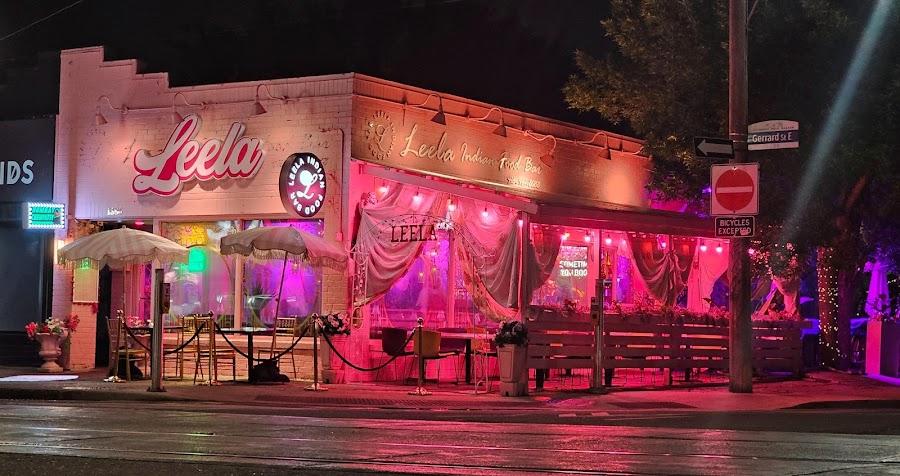
Leela Indian Food Bar on Gerrard Street East is attempting something most contemporary Indian restaurants in this city won't touch: the democratic, chaotic spirit of the roadside dhaba — truck drivers and office workers eating from the same pot — transplanted into a room with chandeliers, wall murals, and plated garnishes. That's a genuinely difficult tension to hold together, and by most accounts Leela pulls it off in a way that separates it from the upscale Indian spots that sand down every rough edge in the name of approachability. The Amaya pedigree shows in the polish, but the cooking reportedly roots itself somewhere more interesting. This is Leslieville, not Yorkville, which means the room runs relaxed, the prices stay low, and the vibe reads neighborhood-local rather than special-occasion theater.
The Charcoal Butter Chicken is the anchor dish and the one diners consistently point to first. It's built around tandoor char layered beneath a tomato-butter gravy made with dry fenugreek and locally sourced tomatoes — reportedly a version that tastes like someone made a deliberate decision rather than followed a category template. The Palak Paneer is known for a livelier herb-forward green spice base than the muddled takes common at places coasting on the dish's goodwill. The Lasooni Cauliflower has developed a reputation as the dark-horse order — a sweet-spicy swing that, according to regulars, tends to be what you mention to someone the next day.
Weeknight bookings are the move if you want a table that isn't competing with the room's full noise level. Positioning matters here — the mural is theatrical enough that where you sit shapes the experience. The practical sequencing that keeps coming up in reviews: open with the cauliflower, anchor the table on the butter chicken, and let the palak paneer cover the remaining registers. At this price level, the risk is low and the upside is real.
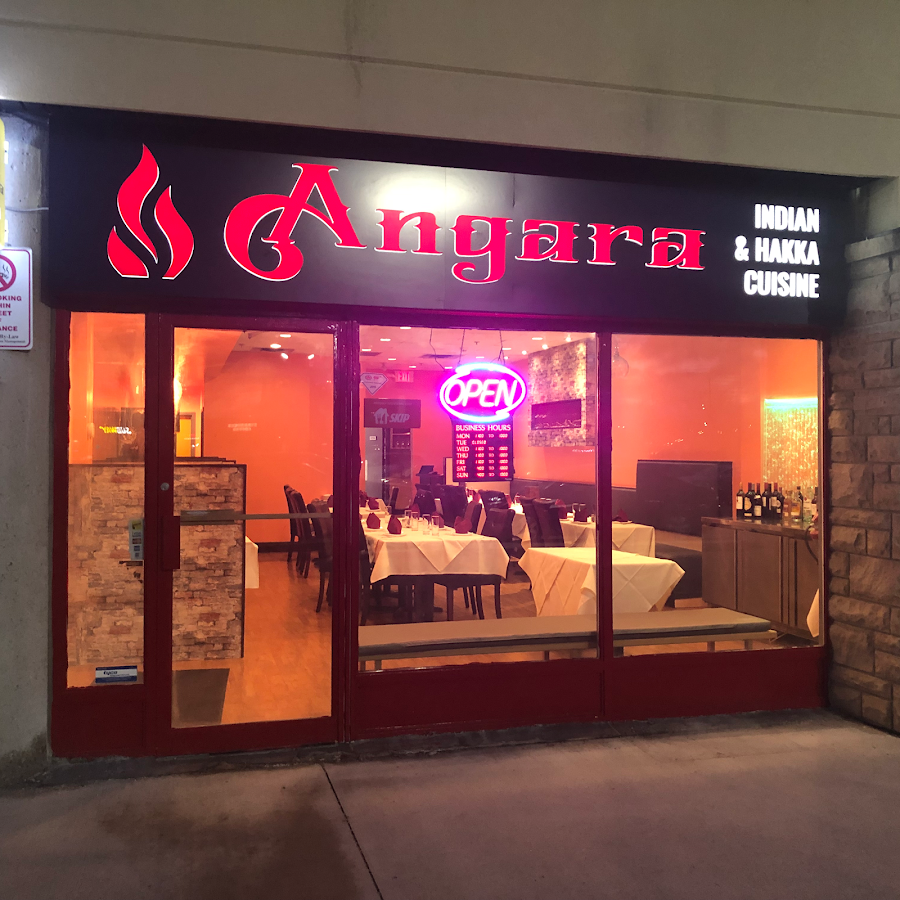
Etobicoke's strip-mall Indian corridor is thick with safe, predictable tikka masalas, and Angara is not interested in that conversation. The kitchen runs a genuinely unusual dual identity — subcontinental comfort food and Indo-Chinese Hakka on the same menu, out of the same certified-halal house on Eglinton West. The room leans into that ambition: graphic-forward decals, an interior that reads Indian but with a Western looseness to it, the kind of place you'd bring a group that thinks they know what they want and then discover they don't. The "Chef Special" column is where the kitchen's point of view lives, and that's where your attention should go.
The Chef Special Lamb Angara is the dish diners consistently single out — a spiced, creamy curry served on a sizzling plate, reportedly built on a proprietary spice blend that sets it apart from a standard masala base. The theatrics of the sizzling plate apparently back something up rather than just paper over it, which is not a given in this category. The Chef Special Chicken Angara runs in the same direction: known for bold, directional heat rather than heat for its own sake. For the table's vegetarian, the Chef Special Bombay Paneer is the move — dry-prepared with red onion, green chilli, and curry leaves, a preparation that makes the case that paneer doesn't require a cream sauce to anchor a dish. All three are what regulars point to when steering first-timers away from the familiar.
Weeknights are reportedly the quieter option; weekends draw families who treat this as a standing rotation, which tells you something about consistency. A downtown location has since opened, but the original Etobicoke room is where the kitchen's reputation was built. Order the Lamb Angara, order the Bombay Paneer, and let someone else handle the Hakka side so you can negotiate bites.
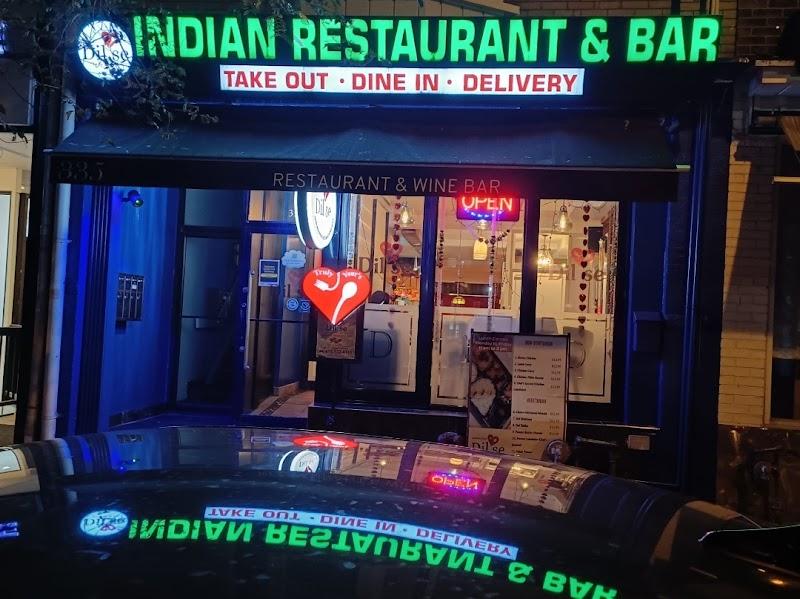
Chef Mani Panwar came up at Bombay Bhel before striking out to open Dil Se on Gerrard Street's India Bazaar strip, and that career arc shapes what the kitchen is apparently trying to do: deliver Punjabi Dhaba-style cooking — unapologetic, spice-forward, Northern Indian — without filing down its edges to suit a cautious crowd. The room is reportedly dressed with more intention than the price point (level one) typically demands: linen-draped tables, walls layered in colorful fabrics, a pacing that resists the quick-turnaround model. That combination of considered atmosphere and genuine technique at this end of the pricing scale is genuinely uncommon on the strip.
The menu centers on the Lababdar preparations, which regulars and online commentary consistently single out as the reason to come. The Paneer Lababdar is the kitchen's benchmark dish: fresh cow's milk cheese in a Mughlai-style sauce — cashew-enriched, orange-hued — that's known for building richness gradually rather than announcing itself all at once. The Chicken Lababdar runs a parallel track, same aromatic backbone and careful spice layering, but drawing on the added depth that a bone-in preparation reportedly carries. Then there's the Chicken Kamasutra, the dish most closely associated with Panwar's reputation and the one diners circle back to, according to nearly every account of the restaurant. The name courts theater; the cooking, by all reports, does not.
Gerrard India Bazaar rewards a weeknight visit if you want the room at a relaxed pace — weekends fill up and the linen-draped tables are reportedly better enjoyed without the crowd. Anchor your order around the Chicken Kamasutra; it's the dish that explains, more than anything else on the menu, why this chef left a larger operation to open his own kitchen.
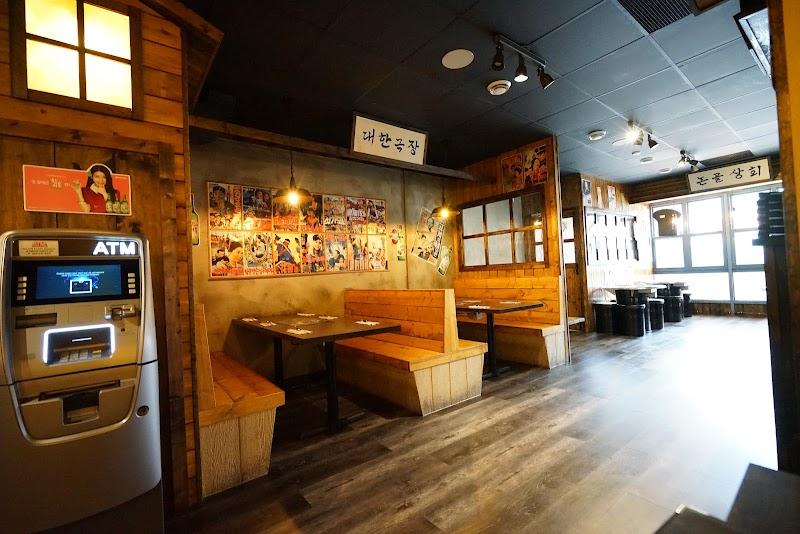
Mapo Korean BBQ takes its name from Mapo-gu, the Seoul district where open-flame barbecue is less a dining concept than a civic institution, and that context shapes everything about the Bloor Street room. This is not a high-gloss KBBQ hall designed around ambient lighting and shareable moments — it's a timber-framed, close-quarters space in the heart of Toronto's Koreatown where the format is resolutely communal. The Christie Station location means the neighbourhood already speaks to what the kitchen is doing: this stretch of Bloor has the cultural density to hold a place like this accountable, and by all accounts Mapo holds up. The room is reportedly the kind where a long Friday dinner with eight people around a table feels like the point, not an inconvenience the restaurant merely tolerates.
The menu centers on staff-managed grilling, which diners consistently flag as the thing that separates Mapo from spots where raw protein arrives and servers disappear. The Samgyeopsal — pork belly — and Galbi — short rib — are the grill anchors the kitchen is known for, with staff reportedly tending the tabletop fire through the cook rather than leaving it to the table. That distinction matters for anyone who has watched a group of six collectively overcook everything at an unattended grill. The Seafood Pancake is widely cited as the right move while the coals come up, functioning as a shared opener before the main event. The Mala Rose Tteokbokki signals that the kitchen is willing to push outside a strictly traditional frame — a detail worth noting for anyone who wants something beyond the grill to round out the order.
Walk-ins on weekday evenings are reportedly a real possibility; Friday and Saturday are a different story and advance booking is the practical call. At price level two, the value-to-occasion ratio is one of the more defensible on this stretch of Bloor. Order the Samgyeopsal and Galbi as your foundation, add the Seafood Pancake to share early, and let the staff run the fire.
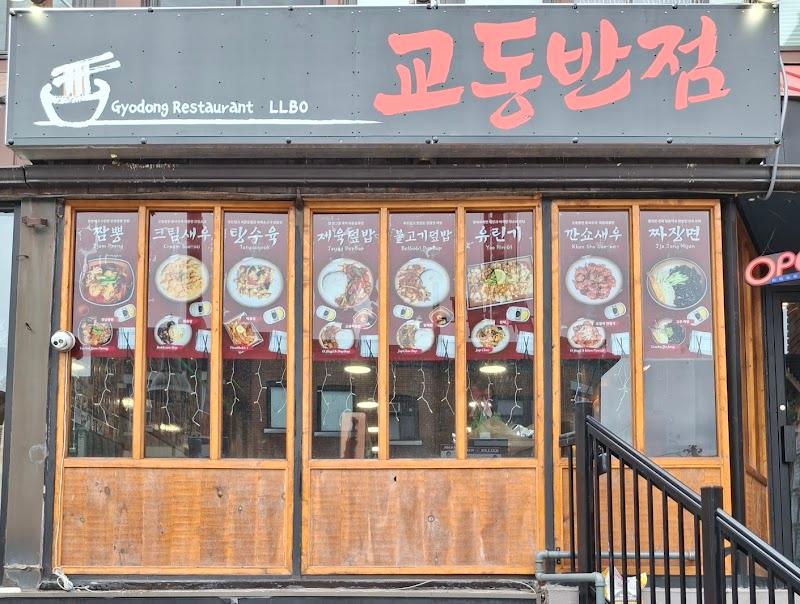
Gyodong, at 694 Bloor St W in the western stretch of Toronto's Koreatown, is making a genuine argument that the neighbourhood's most interesting Korean dining extends well beyond the BBQ-and-soju formula. This is a jungshik kitchen — the Chinese-Korean cuisine that occupies its own distinct lane in Korean food culture — and by all accounts Gyodong owns that lane without apology or translation. The retro South Korean decor reads like a dining room lifted wholesale from a pojangmacha back home, and the crowd that regulars describe — multigenerational Korean families, students who clearly know exactly what they're doing, the occasional first-timer trying to keep up — tells you how this place has built its following. It's not performing anything for anyone.
The menu centers on the holy trinity of jungshik: Jajangmyeon, Gan Jjajang, and Jjamppong. The Jajangmyeon is known for its thick, chewy noodles in a deeply savory black bean sauce, a dish where the balance of salt and sweetness is reportedly the marker of quality — and diners consistently suggest this version gets that calibration right. The Gan Jjajang is the drier, more concentrated cousin: the sauce reduced until it clings rather than pools, and regulars point to it as the move for anyone newer to the cuisine. The Jjamppong — a spiced seafood broth noodle dish — is frequently described as arriving in portions generous enough to anchor a table. Rounding things out is the Tangsuyuk, crispy fried pork served with a sweet-sour sauce intended for dipping rather than drenching, which is how the crunch reportedly survives to the last piece.
Gyodong is closed Tuesdays, which matters because weekends fill fast and the wait is real. A Thursday arrival before 6:30 pm is the practical move. The regulars' strategy worth knowing: unlimited rice comes with the meal, and the Gan Jjajang sauce is, by all accounts, exactly what you want to finish it with. A second location exists in Mississauga, but the Bloor original is the one with the reputation.
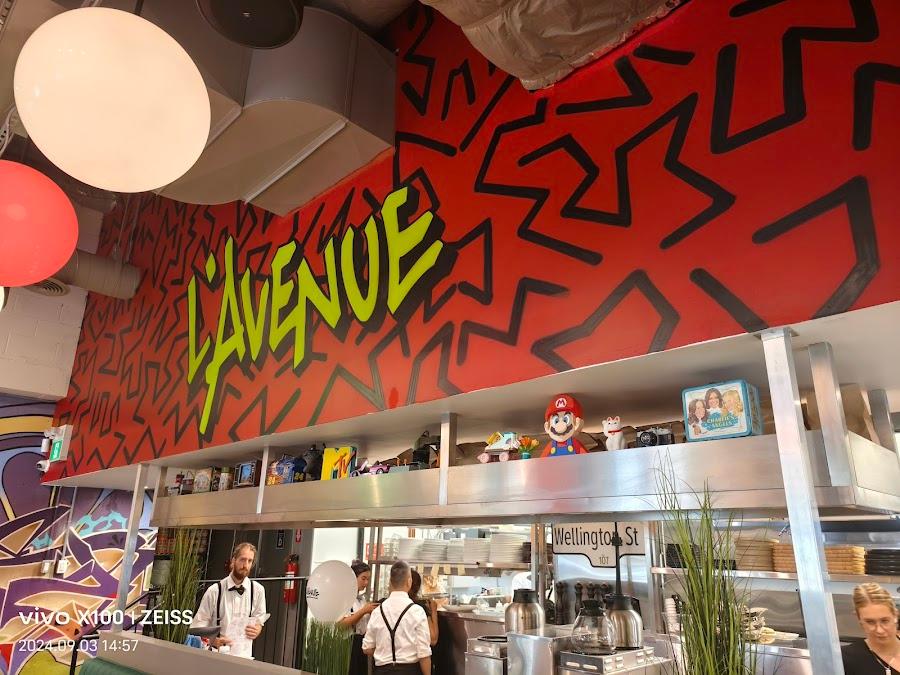
Quick correction before you set your GPS: despite the Roncesvalles billing, this L'Avenue is at 433 Wellington West inside The Well, not the west end. Worth the map fix. The Montreal brand has been feeding brunch crowds since 1994, and Chef Manolo Quilang — La Banane on his resume — brings actual technique to a room that's pure chaos: graffiti walls, disco balls, motorcycles, mannequins, and four washrooms designed like separate fever dreams. Come with a crew; this holds at a big table. Order the sticky toffee pancakes, which arrive rich enough to split, and don't skip the amber-grade maple syrup they're serious about. The Montreal smoked meat Benny is the move for anyone who wants their brunch to punch back, and Bobby Does Dallas ($29.50) piles AAA ribeye, cheddar scrambled eggs and barbecue sauce over their seasoned potatoes — genuinely a two-fork situation. Vegetarians, the red shakshuka has you. Portions run generous across the board. Book Sunday if you want a live DJ soundtracking your eggs; book any other day if you'd rather hear your friends talk.
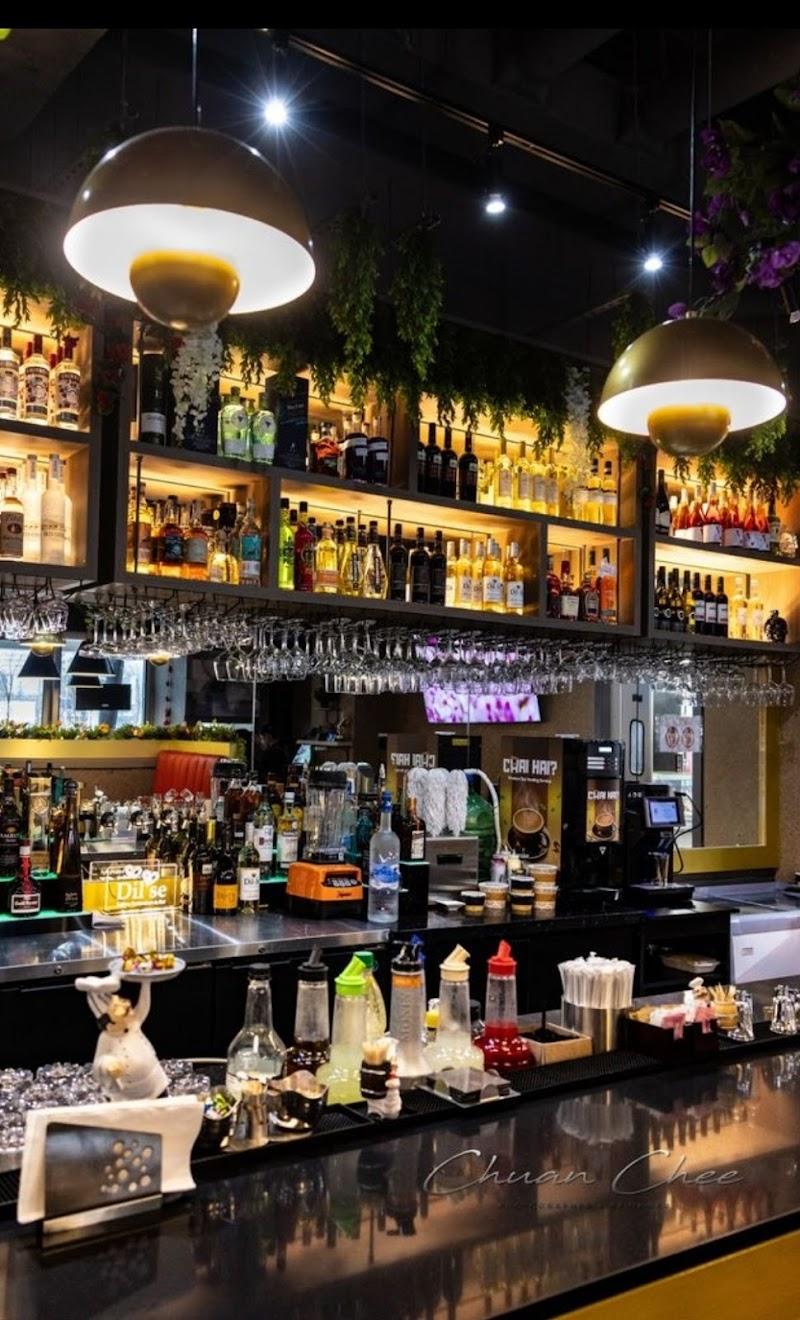
Dil Tak sits right on the waterfront off York Street, steps from Scotiabank Arena, which makes it my new answer for feeding a hungry twelve-top before a game without resorting to arena hot dogs. Chef Mani Panwar — formerly Head Chef at Bombay Bhel — cooks North Indian with real charcoal conviction, and the dining room carries it: cardamom, cumin, and tandoor smoke hanging in the air before your first order lands. His signature Chicken Kamasutra is the one to build a table around, generous enough to share and worth the fuss. Paneer Lababdar is the vegetarian anchor, all aromatic gravy, and the Butter Chicken earns the superlatives regulars throw at it. Order the Garlic Cheese Naan for the table — soft, fluffy, properly blistered — and finish with Gulab Jamun that arrives warm and thoroughly soaked. Dinner runs roughly $40–60 per person, which reads high until you factor in the harbourfront room and the hospitality; one party arrived near closing and the chef personally sorted them a table. Come with a crowd and a reason to celebrate.
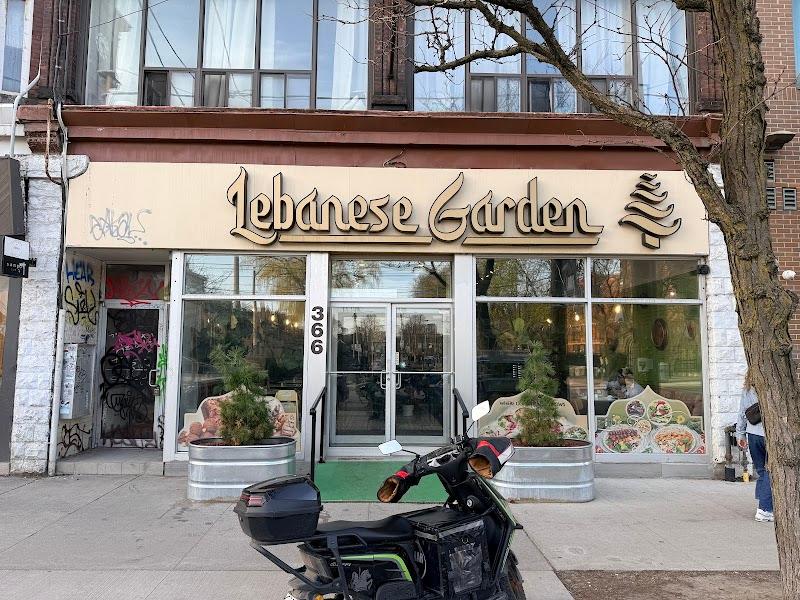
Lebanese Garden has been holding down its spot on College Street near Kensington for over thirty years, and the longevity is not accidental. The operation runs a serious catering arm — University of Toronto and TMU have been on the client list — which means the kitchen is built for volume without the usual shortcuts that come with it. Forty-four seats, halal-certified proteins sourced from HMA butchers, and according to the restaurant, everything from the pickles to the falafel is made in-house. That last detail is the one that separates a place with standards from one that's just filling a gap in the neighborhood. Price level stays firmly in the budget range, which at this quality of sourcing is the kind of math that keeps regulars coming back on a Tuesday.
The menu centers on the things Lebanese kitchens do when they're not cutting corners. The Grilled Chicken Shawarma is the headliner — diners consistently point to it as the reason they return, and the house approach to seasoning is reportedly deliberate rather than generic. Hummus here has a reputation for being the real article rather than the over-processed version that passes for it elsewhere. Fattoush Salad is described as bright and acidic, which, if true, puts it ahead of most versions of a dish that restaurants routinely flatten into blandness. Garlic Potatoes have their advocates among regulars. The Vegan Falafel is made fresh on-site, which the restaurant credits for its texture holding up properly — a claim that tracks with what catering-scale kitchens tend to get right when they're actually paying attention.
Practically: they're open 10 AM to 10 PM daily, which makes this as useful for a late-afternoon reset as it is for lunch. The catering pedigree means midday service reportedly moves without much friction. Start with the shawarma and hummus, and budget for two people — the total, by all accounts, will be lower than it should be.
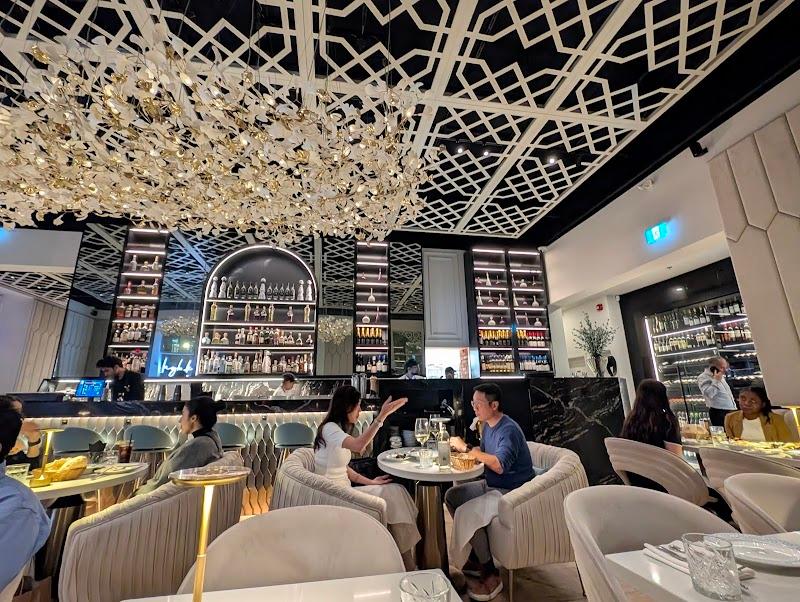
Let's get one thing straight about Laylak Lebanese Cuisine: this is not the kind of place doing quiet, low-key Middle Eastern cooking in a strip-mall setting. The restaurant sits at 25 Toronto Street in the Financial District, and by most accounts the room announces itself immediately — 36 gold and white chandeliers reportedly fused into one cascading overhead installation, cream walls, the whole unapologetically theatrical package. Chef Hazem Al Hamwi and owners Youssef Harb and Hashem Almasri appear to be betting that Toronto is ready for Lebanese cooking that dresses the part without hedging about it. From what's documented, they're winning that bet. This is a room designed for deal closings, genuine celebrations, and impressing someone who will notice the difference.
What keeps Laylak from being a chandelier-first, cooking-second proposition is the kitchen's apparent discipline with the fundamentals. The hummus here is consistently described as the kind built from dry-rehydrated chickpeas, cooked with olive oil and stripped of their casings — a process that produces a noticeably smoother result than the shortcut versions. The kibbeh safarjaleah, one of the more distinctive things on the menu, is a crispy ground beef preparation in tomato sauce with pearl onions and quince — the quince providing a tartness that diners report cuts through the richness in a way that makes it hard to stop ordering. The chicken tawouk, marinated and grilled, reads as the menu's argument that classical technique still matters even on the more straightforward end of a menu.
Practical notes worth knowing before you go: weeknight reservations will get you a calmer room — weekend service in this neighborhood draws a full celebratory crowd and the volume follows. Book ahead regardless. Laylak also operates as halal while running a full cocktail program, a combination that's genuinely uncommon at this price point and worth flagging if you're coordinating a larger group.
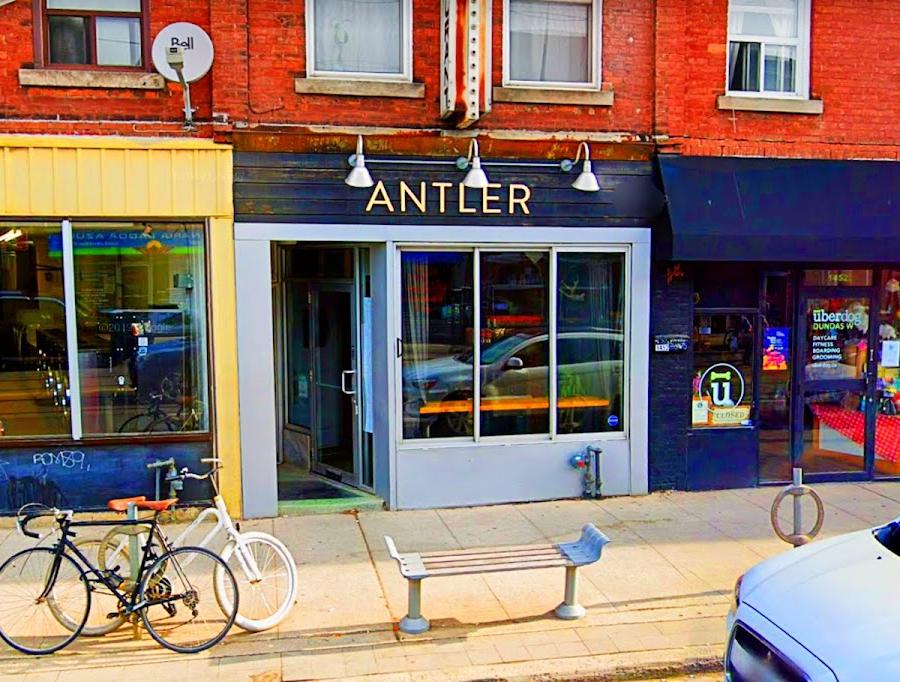
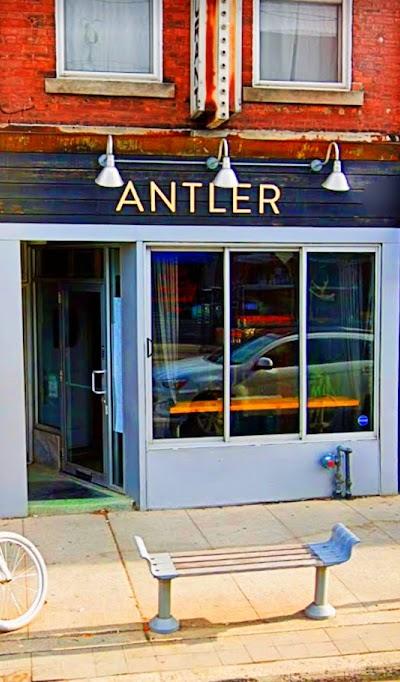

Antler Kitchen & Bar is one of those rare Toronto restaurants where the concept feels like a conviction rather than a marketing exercise. Chef Michael Hunter and collaborator Jody Shapiro built something at 1454 Dundas West that's genuinely hard to manufacture: a 40-seat room that reads like a hunting cabin your most interesting friend inherited — exposed brick, mounted antlers, mushroom photography — all of it coherent without tipping into theme-park territory. The Michelin Guide flagged it back in 2020, but the regulars were already there. The kitchen centers on Canadian terroir and wild ingredients, with a seasonal menu that has an actual point of view: foraged and hunted proteins treated with the same seriousness other kitchens reserve for French technique.
The menu's three anchors tell you exactly what this place is about. The Venison Tartare — shallots, capers, egg yolk, crispy crackers — is reportedly built around restraint, letting the venison carry the weight rather than masking it under sauce; diners consistently point to it as the right way to open. The Bison Ribeye with polenta, kale, and rapini sits at the opposite end of the register: rich and hearty, a dish that makes a case for bison on its own terms. Then there's the Roasted Hen of the Woods Salad, which regulars keep coming back to specifically — a strong signal that the kitchen is treating mushrooms as a main character, not a garnish. That's the through-line here: ingredients with a story, not a supporting role.
Practical notes: the 20-seat back patio fills fast on weekends in summer, so the move is showing up at the Saturday or Sunday 3pm opening and letting dinner become a long afternoon. Reservations run through Tock — walk-ins on a Friday are a gamble you'll probably lose.
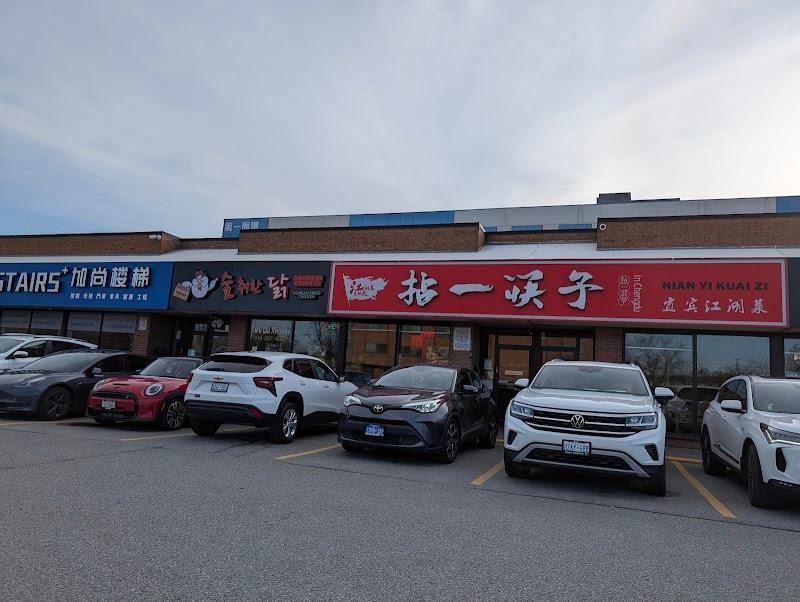
Nian Yi Kuai Zi occupies a strip-mall unit on the Finch Avenue corridor in Scarborough, and it has quietly built one of the more compelling reputations in that stretch of the city. The cooking falls under the Yibin Jianghu banner — a regional Sichuan style sometimes translated as 'rivers-and-lakes' cooking, a market-driven tradition that prizes bold, numbing heat and fresh ingredients over the kind of restraint you'd associate with banquet-hall Chinese. With more than 2,500 reviews trending toward the high end of the rating scale, this is not a room that flies under the radar locally, even if the broader Toronto dining conversation has been slow to catch up.
The dish that consistently anchors the table in reviews and repeat-visitor accounts is the Jianghu fish — a málà-forward preparation built around dried chili and Sichuan peppercorn, the combination that defines the cuisine's signature numbing-spicy effect. Alongside it, the twice-cooked pork is reportedly the other anchor order: pork rendered down and crisped, then tossed with leeks and bean paste in the manner the dish is known for across Sichuan. Beyond those two, the menu runs through a range of Sichuan málà preparations, and diners note that even dishes ordered at lower heat levels carry genuine chili presence — which, by the logic of this cooking style, is the point rather than a miscalibration. Portions are described as generous, with leftovers common.
This is a table built for group ordering and shared plates rather than a quiet two-top dinner. The practical advice that surfaces across accounts is consistent: anchor the meal around the Jianghu fish and the twice-cooked pork, ask staff to guide you through the regional specialties, and arrive with people who are prepared for cooking that does not pull its punches on heat.
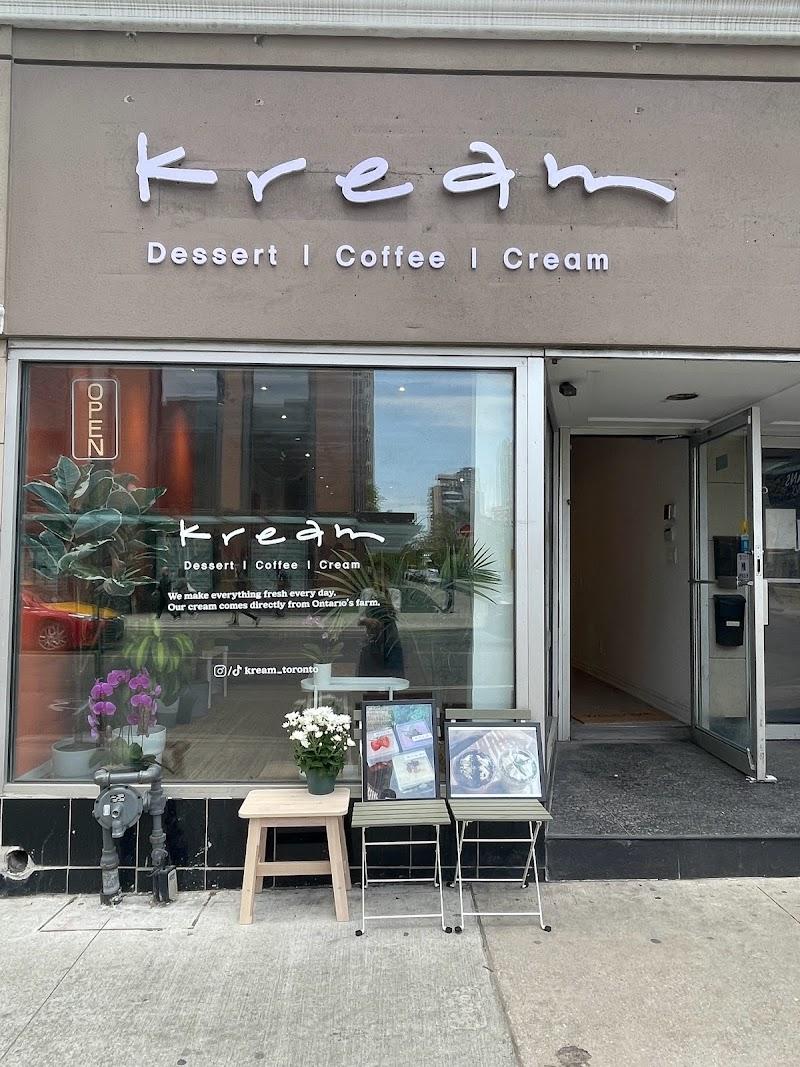
What Kream is doing on Yonge Street is worth saying plainly: this Korean dessert cafe has built a concept around the fill rather than the shell, and that distinction matters. While a lot of Toronto spots leaned on flaky lamination as the whole trick, Kream centers its menu on the Kream Bomb — a square croissant piped with fresh cream in rotating flavour profiles. The room is small and unapologetically grab-and-go, which from everything I've read is exactly the right call for this block. The clientele reportedly skews toward Wellesley subway commuters, students, and anyone who looked at the pastry case and abandoned whatever plan they had. The price point stays genuinely low, which means ordering more than one thing carries no real consequence.
The Tiramisu Kream Bomb and Creme Brulee Kream Bomb are the variations diners consistently point to first — the tiramisu reportedly carries enough bitter coffee depth to keep things from going cloying, while the creme brulee is known for a faint caramelized note that tracks the flavour it's named after. The Basque Cheesecake is the other serious item on the board: by all accounts it moves fast enough to arrive fresh, with the properly burnt top and custardy interior that define the style when it's done right. The Earl Grey Latte gets consistent mentions as the right pairing if you're not treating this as a pure grab-and-run.
Practical reality: the Basque Cheesecake is widely reported to sell out first, and the post-school rush hits around 3:30pm, so earlier is better if the cheesecake is the reason you came. The space isn't designed for a long sit, so plan accordingly. Get the Tiramisu Kream Bomb, the cheesecake, add the Earl Grey Latte, and don't expect a table to hold your afternoon.
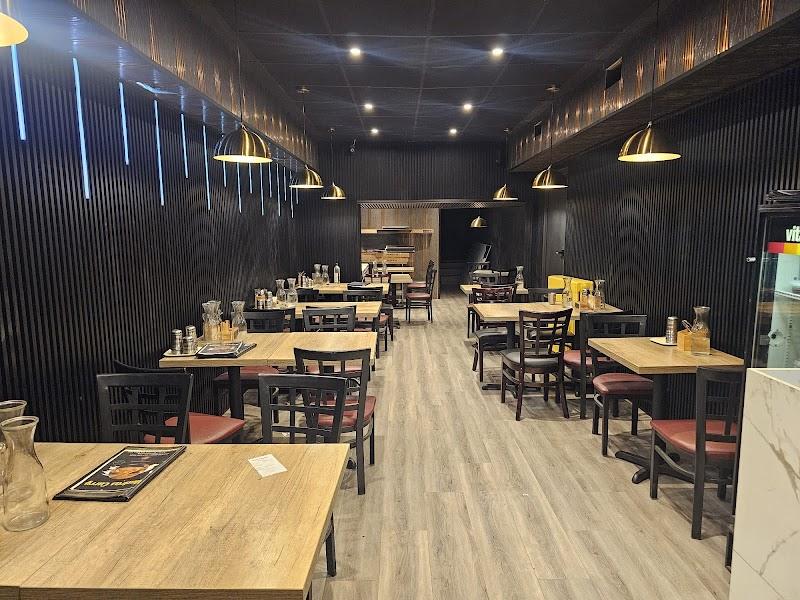
Madras Curry on Carlton Street is not working to impress you with atmosphere. The room inside Gerrard India Bazaar is casual to the point of bluntness — no curated lighting, no concept statement — and that directness is reportedly the whole argument. What the kitchen centres on, at prices that feel almost confrontational in 2024 Toronto, is South Indian technique at a moment when much of the city's Indian dining still defaults to the North Indian greatest-hits format. The Gerrard corridor matters precisely because places like this exist here, and Madras Curry is consistently cited as one of the reasons regulars keep coming back to it.
The Masala Dosa is the dish that anchors the restaurant's reputation. Diners return specifically for it, which in a city where dosas are frequently either too thick or arrive lukewarm is meaningful specificity. The menu's approach is rooted in fermented batter and regional South Indian proportion — the kind of cooking where mustard seed, curry leaf, and properly loosened sambhar do the argumentative work. Chicken 65 is the other anchor: deep-fried, reportedly crimson-lacquered, and known for a layered heat that builds rather than lands all at once — the bar-snack dish that people order as an opening move and then wish they'd ordered more of. The Chicken Dum Biryani rounds out the trio; customers consistently describe it as very flavourful, slow-cooked, and aromatic, which in biryani terms is exactly the standard that matters.
The practical approach: come hungry, order the Masala Dosa and Chicken 65 together, and treat the Chicken Dum Biryani as the reason you brought someone along to share. This is a walk-in situation — no reservations — and the room reportedly fills faster than its low profile would suggest. Come off-peak if you want space to actually settle in.
Explore next
Related guides

Guide • toronto
Best Restaurants in Toronto 2026
The definitive Toronto restaurant list — Alo at the top, Edulis close behind, and ten picks that span a 40-year institution, a wood-fire Mexican kitchen, a West African tasting menu, and the east end bistro everyone is suddenly talking about.
Read guide
Guide • toronto
Best Group Dinner Restaurants in Toronto
Toronto restaurants built for shared ordering, strong room energy, and nights that need a little more movement.
Read guide
Same guide in other cities
Get the App
Save these spots to your Toronto list
Save these spots to your Toronto list in the TastyPals app, then explore similar restaurants when you want a tighter shortlist for the night.