GuideUpdated July 15, 2026

15 Best Chinese Restaurants in Vancouver

The 15 best chinese restaurants in Vancouver, sorted by rating and curated by TastyPals editors.

The best chinese restaurants in Vancouver are Lamajoun, iDen & Quanjude Beijing Duck House, Osmanthus Chinese Fusion Restaurant, and more. Start with Lamajoun if you want the strongest overall first pick.

By Marcus Chen15 ranked picksPublished July 15, 2026Updated July 15, 2026
15 Best Chinese Restaurants in Vancouver
Google

Top picks at a glance

How the restaurants compare

How we chose

We looked for restaurants that feel like a strong fit for the guide topic, not just the most obvious names in the city. The shortlist favors rooms with clear mood, dependable pacing, and enough distinction to help someone decide faster. Read our full methodology →

Room tone

Lighting, pace, and general energy all need to support the reason someone clicked this guide.

Food fit

We favored restaurants that feel best suited for the moment, not just restaurants with broad reputation.

Useful range

The final list tries to give readers enough variation in neighborhood, price, and style to compare real options.

15 ranked picks

LamajounSomebody filed Lamajoun under "Chinese," which is one of those Richmond misfires that tells you nothing about the actual joint. This is Armenian-Georgian comfort food run by Serge and his wife, who've been at it since 2011 and treat you like you wandered into their living room. The signature lahmajoun — ultra-thin dough, no yeast, no sugar, topped with ground beef, tomato, garlic, parsley — runs $8.49 and is the single best cheap thing you'll eat all week. Get it. The khinkali dumplings ($31.50 for five) are the splurge, fat soup-filled Georgian bundles worth eating with your hands. There's a cheese pide at $22.75 and a beef kebab wrap ($18.49) the regulars keep pointing at. Everything's made from scratch, no MSG, no margarine, and you can walk out full for under fifteen bucks if you keep it simple. The quirk: you order downstairs and your food rides up on a pulley with a buzzer. It's daft and charming and exactly the kind of unpretentious that Vancouver forgets it needs. View restaurant →
iDen & Quanjude Beijing Duck HouseFew Vancouver restaurants arrive with the institutional weight that iDen & Quanjude brings. The Quanjude lineage traces to Beijing in 1864, and the hanging-oven roast duck technique it pioneered was designated part of China's intangible cultural heritage in 2008. That history is not decorative — it establishes a standard the kitchen must either honour or quietly fail to meet, and it is the lens through which everything here should be judged. Four consecutive Michelin stars from 2022 through 2025 suggest the kitchen is largely meeting that standard. Chef Allen Ren has built a reputation positioning this room as a serious address for Chinese fine dining in North America, and the 2022 residency of Macau Three-Star chef Joseph Tse added further credibility to that signal. The dining room — gold-accented, reportedly opulent without tipping into excess — is designed to earn the occasion on its own terms. The private iDen room, with its projected virtual environments ranging from imperial palaces to forests, is the kind of theatrical flourish that will read as either inspired or overwrought depending on your appetite for immersive staging; accounts suggest it divides opinion reliably. At price level four, what you are paying for is pedigree, precision, and room. The menu centers on Peking duck prepared according to the Quanjude hanging-oven tradition — a method diners consistently cite as the reason to book, and one that carries enough documented history to justify the scrutiny it invites. Whether any single service honours that lineage fully is a question only the table can answer. Practical considerations: reserve the private room only if the theatre suits your group, and confirm Peking duck availability at the time of booking rather than assuming it is always on offer. View restaurant →
Osmanthus Chinese Fusion RestaurantTucked onto the second floor of Aberdeen Centre, Osmanthus makes a case for Jiangnan cuisine as a dress-up affair — Shanghai cooking with a fusion gloss, served in a room that earned a spot on the Chinese Restaurant Awards 2025 Elite 30 Canada list. This is the kind of place that holds together at a celebratory twelve-top, and the kitchen rewards the occasion. Start with the truffle siu mai, which arrive beautifully plated and far more perfumed than the genre usually allows, then move to the xiao long bao — the soup dumplings here are a genuine standout, not an afterthought. The lobster yee mein is the splurge dish, rich and savory and clearly built on serious ingredients, while the Shanghai-style smoked fish brings a cooler, sweeter counterpoint worth ordering for the table. Service skews attentive, the decor upscale. At roughly $80 to $250 a head it's a higher-end outing, but reviewers consistently flag the portions and value as fair for what lands. Come hungry, come with a crew, and order the dumplings twice. View restaurant →

Get the App

Save these spots to your Vancouver list

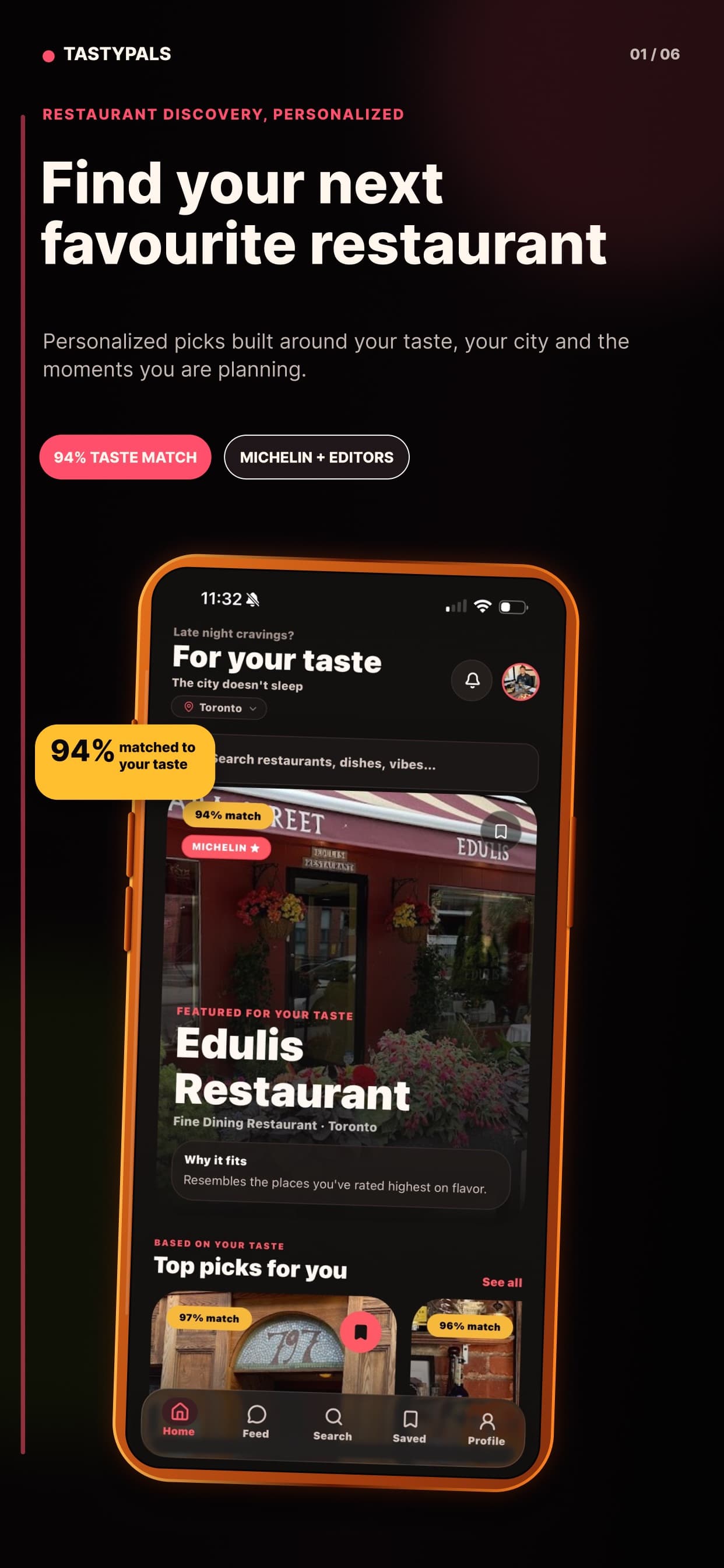
Keep the shortlist handy in the TastyPals app and find similar restaurants across Vancouver.

Personalized city picksCleaner shortlistsBuilt for iPhone and Android
TastyPalsTonight
Your taste. Our picks.
Smarter follow-through after the guide: better restaurant context, quicker narrowing, less second-guessing.
For tonight
Date night spots with warm rooms and polished service
Next step
Keep exploring in the app when you want a tighter shortlist
Hello Nori - RichmondHello Nori in Richmond is a Japanese hand roll counter that has quietly built a reputation around a concept most sushi spots in Metro Vancouver are still overthinking: restraint at an accessible price point. At price level one, the format is deliberately simple — the 6-Hand Roll Set Menu is the spine of the operation, structured enough to keep the kitchen cooking to tempo while staying casual enough that you're not sitting at attention. The Richmond crowd that shows up here already knows quality and doesn't need mood lighting to validate a meal, which is probably why the place has developed the following it has. The set menu is the move, particularly on weekdays when pacing is reportedly tighter and the nori holds its crispness the way it's supposed to. Within the lineup, the Truffle Lobster Hand Roll is what diners tend to talk about — reportedly the kind of combination that shouldn't work at this price point but does, with the nori itself doing a lot of the heavy lifting before the filling even enters the conversation. The Bluefin Tuna Hand Roll runs in a cleaner, less showy direction, which the menu's fans seem to appreciate as a counterbalance. The Salmon Oshi shifts registers entirely — pressed sushi, denser and more architectural than the hand rolls, and consistently cited as a reason to pay attention to oshi as a format rather than treating it as an afterthought. The Kale Goma-ae rounds things out as a side that, based on what regulars report, actually earns its place on the table rather than just checking a vegetable box. First-timers are best served by letting the set menu do its job rather than going à la carte immediately — the format exists for a reason, and it'll tell you exactly what to double on your next visit. Counter seating is worth requesting if available. Come early. View restaurant →
Chinatown BBQChinatown BBQ occupies a room on East Pender Street that, by most accounts, does something genuinely difficult: it reads as vintage without sliding into theme-park nostalgia. The 70s-Chinatown aesthetic is described by regulars as affectionate rather than self-conscious, and the restaurant's inclusion on the 2024 Chinese Restaurant Awards' Top 30 Best of Vancouver is the kind of credential that reflects sustained kitchen consistency rather than a single well-timed moment. In a neighbourhood with real competition and a long institutional memory, that recognition means something. The menu is anchored in Cantonese roast tradition — a discipline that demands daily fresh product and exacting technique, and one that regulars use as a benchmark for the whole room. The Signature 3 BBQ Meat platter, combining BBQ pork, roasted pork, and BBQ duck, is widely regarded as the kitchen's defining statement, and the roasted pork in particular is consistently cited for its crackling — the detail that separates a roaster doing the work from one cutting corners. The award-winning beef brisket curry is the menu's more unexpected proposition: a dish that suggests the kitchen isn't content to operate purely within Cantonese roast orthodoxy, and which has drawn enough recognition to stand as a draw in its own right. Owner Bobby is noted for attentive, allergy-aware service — the kind of floor presence that builds the repeat-customer trust a neighbourhood place depends on. At a mid-range price point, the restaurant has a reputation for value that holds up relative to what the kitchen is reportedly executing. Lunch service tends to move at a brisker pace if you're working around time. The practical call: come with the three-meat platter as the anchor and add the beef brisket curry to the table. View restaurant →
Fat Mao Noodles (Thai Soup Noodles)-ChinatownFat Mao Noodles is not Chef Angus An's most famous room — that would be Maenam, his elevated Thai restaurant across the city — but it may be his most deliberate argument. Since opening on East Georgia in Chinatown in 2015, this compact counter has been making the case that Thai-Chinese soup noodles, built with genuine technique and no shortcuts, belong in the same conversation as any serious bowl in Vancouver. The space, decorated in cat memorabilia and comic book art, reads casual; the cooking, by all accounts, does not. The menu centers on three dishes worth understanding before you arrive. The khao soi — the northern Thai Chiang Mai classic — is what regulars and critics consistently point to first: scissor-cut rice noodles in a deeply spiced coconut broth, anchored by braised chicken leg, topped with crispy fried noodles for contrast, and finished with fresh herbs. It is reportedly rich without tipping heavy, which is a harder balance to sustain than it sounds. The braised duck noodles work a different register: aromatic soy broth, a duck leg that has had real time applied to it, Asian celery and bok choy for brightness, and best ordered — according to those who know the menu — with Shanghai wide noodles for textural weight. The hot and sour pork noodles offer a clear rice sheet noodle base with BBQ pork, Vietnamese ham, peanuts, and crispy shallots; the profile is acidic and contrasting rather than rich, and at the price point, the value-to-craft ratio is widely regarded as one of the more honest in the city. Practical details matter here. The room is small, turnover is real, and the kitchen closes at 8:30pm — this is a lunch or early-dinner destination, not a late-night plan. The original Chinatown location at 217 E Georgia carries an atmosphere the newer downtown outpost hasn't had time to develop. Come before the rush, and start with the khao soi. View restaurant →
Bao BeiBao Bei arrived in Vancouver's Chinatown before the neighbourhood became a dining destination, and it is widely credited as one of the rooms that helped make it one. That origin matters: this is not a restaurant that followed a trend but one that helped set the conditions for it. The concept is a Chinese brasserie — a framing that signals something looser and more convivial than a traditional Chinese restaurant, with a cocktail program that is, by consistent account, properly constructed rather than decorative. The drinks are reported to reflect a bar genuinely thinking about flavour and balance, which is a meaningful distinction in a room where the food is accomplished enough to compete with the glass rather than simply accompany it. Because no specific dishes are currently verified for this listing, it would be irresponsible to describe what is on the plate with any precision. What the restaurant's reputation consistently supports is a kitchen working within a Chinese culinary framework while operating with the pacing and sensibility of a brasserie — an approach that tends to reward sharing and an unhurried evening rather than a single-course transaction. The room itself is described across multiple sources as warm and lively without tipping into chaos, which is a harder balance to maintain than it sounds. Practically: Bao Bei takes reservations and is situated on Keefer Street in the heart of Chinatown, with the neighbourhood's walkability making it a reasonable anchor for a longer evening. Price level sits at mid-range, which given the room's reputation for quality and atmosphere represents a defensible proposition. If you are bringing guests who want to understand what Vancouver's dining scene can produce outside of its more self-conscious fine-dining rooms, this is the address most often cited by people who know both. View restaurant →
TorafukuTorafuku has built a reputation as one of the more intentional modern Asian rooms in Vancouver's Chinatown — a neighborhood that rewards restaurants with a genuine point of view. The concept is pan-Asian fusion approached with evident conviction rather than the scatter-shot eclecticism that label sometimes implies. The space is reportedly dark and music-forward, calibrated for a night out rather than a quiet meal, and the attitude that runs through the menu copy appears, by most accounts, to be matched by what comes out of the kitchen. That combination has made it a reliable draw for younger diners who might not otherwise have a reason to come to this stretch of Chinatown after dark — which, given how interesting the corridor has become, is a service in itself. The menu centers on shareable plates with clear Asian reference points, and the kitchen's reputation rests on doing that format with discipline. Diners consistently single out the wok cookery and the bao program, the latter known for generous fillings and well-made dough. The cocktail list leans into Asian ingredients without tipping into novelty, and by most accounts it matches the room's energy rather than undercutting it. This is food and drink conceived as a single package — the kind of place where the beverage program is part of the proposition, not an afterthought. Practically speaking, Torafuku is a group-dinner and date-night room, not a hushed, candlelit one, and its reputation suggests it is better for that clarity of purpose. Price level sits at mid-range, which makes the downtown-adjacent Chinatown location feel like fair value for an evening with genuine momentum. Reservations are advisable for weekend nights — the room is known to fill with people who came to make a full evening of it, not just grab a plate. View restaurant →
Dynasty Seafood RestaurantDynasty Seafood Restaurant operates the way the best Cantonese rooms in Vancouver tend to — without a rebrand or a fusion pivot to explain itself, simply relying on a kitchen that reportedly understands the architecture of proper dim sum and banquet cooking. The clientele, by most accounts multigenerational and fiercely loyal, returns for weekend yum cha and milestone celebrations built around shared plates and clay pots arriving at the center of round tables. What the research consistently surfaces is the price-to-craft ratio: at a mid-range spend per head, the techniques on offer — braising, steaming, deep-frying with precision — are the kind that take decades to execute cleanly, and Dynasty is known for delivering them without charging banquet-hall prices. The dishes that draw the most attention tell you exactly what this kitchen is about. The Braised Goose Web with Abalone Sauce and Pumpkin is widely cited as a signature — goose web demands long, patient braising to reach the collagen-rich yielding texture the dish is known for, and the abalone sauce is described by regulars as carrying genuine oceanic depth, balanced by the natural sweetness of pumpkin. The Deep Fried Crab Claws with Shrimp Paste are praised for a crust that holds crunch while the shrimp paste interior reportedly stays springy rather than dense. The Sautéed Black Cod with Green Onion and Ginger is considered the quieter demonstration of kitchen confidence — black cod's natural richness needs restraint, and Dynasty's version is known for letting ginger do precise work without overpowering the fish. The Steamed Honeycomb Cake rounds things out: the steamed preparation produces the open, slightly sticky crumb that baked versions reportedly cannot replicate. For the full experience, diners recommend booking a round table for six or more and arriving for weekend lunch service to catch the trolley run. The Diced Abalone and Chicken Fried Rice in Clay Pot is worth requesting specifically — it does not always circulate as a floor push, so call ahead. View restaurant →
Jade Dynasty RestaurantJade Dynasty on East Pender has been part of Chinatown's dining landscape long enough that regulars reportedly don't bother with the menu — they pull up a chair and let the carts do the talking. This is old-school dim sum operating with institutional confidence: an all-day format that refuses to compress itself into a brunch-only window, a room that diners consistently describe as belonging to the neighbourhood rather than performing it for newcomers. Where newer spots pivot toward reservation-only policies and plated presentations, Jade Dynasty is known for the organized, full-house energy of a Sunday morning service — bamboo steamers stacked high, tea poured without prompting, families who have been coming for years seated alongside downtown workers who know they can get proper dim sum at three in the afternoon. The menu centers on the kind of dim sum where the ingredient is the point, not the embellishment. The Crystal Prawn Dumplings are consistently cited as the reason to return — known for a translucent wrapper and prawn filling that diners describe as clean and barely seasoned, the focus on the quality of the shrimp rather than anything layered over it. The Siu Mai with Tobiko is reportedly a textural study: a dense pork-and-shrimp filling topped with briny roe, a combination that regular customers flag as one of the more deliberate pleasures on the cart. The BBQ Pork Buns, available across the full service day, are known for a pillowy exterior and a char siu filling that reportedly reads as genuinely complex rather than simply sweet. The all-day dim sum format at this price point is, by most accounts, something the rest of the city hasn't replicated. Weekday afternoons are the practical move if you want to skip the weekend queue. Sit near the front for consistent cart access, and put in for the Crystal Prawn Dumplings and Siu Mai early — they move fast. View restaurant →

Explore next

Related guides

Get the App

Save these spots to your Vancouver list

Save these spots to your Vancouver list in the TastyPals app, then explore similar restaurants when you want a tighter shortlist for the night.

Personalized city picksCleaner shortlistsBuilt for iPhone and Android
TastyPalsTonight
Your taste. Our picks.
Smarter follow-through after the guide: better restaurant context, quicker narrowing, less second-guessing.
For tonight
Date night spots with warm rooms and polished service
Next step
Keep exploring in the app when you want a tighter shortlist