GuideUpdated July 15, 2026

14 Best Chinese Restaurants in San Francisco

The 14 best chinese restaurants in San Francisco, sorted by rating and curated by TastyPals editors.

The best chinese restaurants in San Francisco are Dumpling Home, San Tung, Hong Kong Clay Pot Restaurant, and more. Start with Dumpling Home if you want the strongest overall first pick.

By Marcus Chen14 ranked picksPublished July 15, 2026Updated July 15, 2026
14 Best Chinese Restaurants in San Francisco
Google

Top picks at a glance

How the restaurants compare

How we chose

We looked for restaurants that feel like a strong fit for the guide topic, not just the most obvious names in the city. The shortlist favors rooms with clear mood, dependable pacing, and enough distinction to help someone decide faster. Read our full methodology →

Room tone

Lighting, pace, and general energy all need to support the reason someone clicked this guide.

Food fit

We favored restaurants that feel best suited for the moment, not just restaurants with broad reputation.

Useful range

The final list tries to give readers enough variation in neighborhood, price, and style to compare real options.

14 ranked picks

Dumpling HomeDumpling Home sits on Gough Street in Hayes Valley, a walk-up counter operation with no particular interest in atmosphere. Its Michelin Bib Gourmand recognition — reportedly the most affordable such distinction in San Francisco — positions it accordingly: this is not a room that asks you to dress up or commit to an occasion. What the space apparently does offer, visible through a glass partition at the back, is a kitchen where dumplings are folded by hand throughout service. That transparency has become, by most accounts, the clearest statement the restaurant makes about its priorities. Owner Lily Wong's menu is built around xiao long bao in several versions — chicken, beef, and a Sichuan numbing pork among them — alongside pan-fried baos and green onion pancakes. The distinction the restaurant is consistently credited for is the handwork itself. Where casual dumpling counters frequently rely on volume and repetition to carry the operation, Dumpling Home is described by those who follow it closely as a place where the craft carries genuine intention. Whether execution holds evenly across every service is a reasonable question for any high-turnover kitchen, but the commitment to hand-folding as the central act — rather than an incidental one — is not in dispute. Practical considerations matter here. Service runs in tight midday and evening windows, and the room moves quickly, so arriving outside peak pressure is the sensible approach. The price level makes the calculus straightforward: there is no cheque to justify, only a decision about where to direct your attention. The xiao long bao is the dish the restaurant is primarily known for and should be the first order placed; the pan-fried baos and green onion pancakes are documented as worthy follow-through, not afterthoughts. View restaurant →

Get the App

Save these spots to your San Francisco list

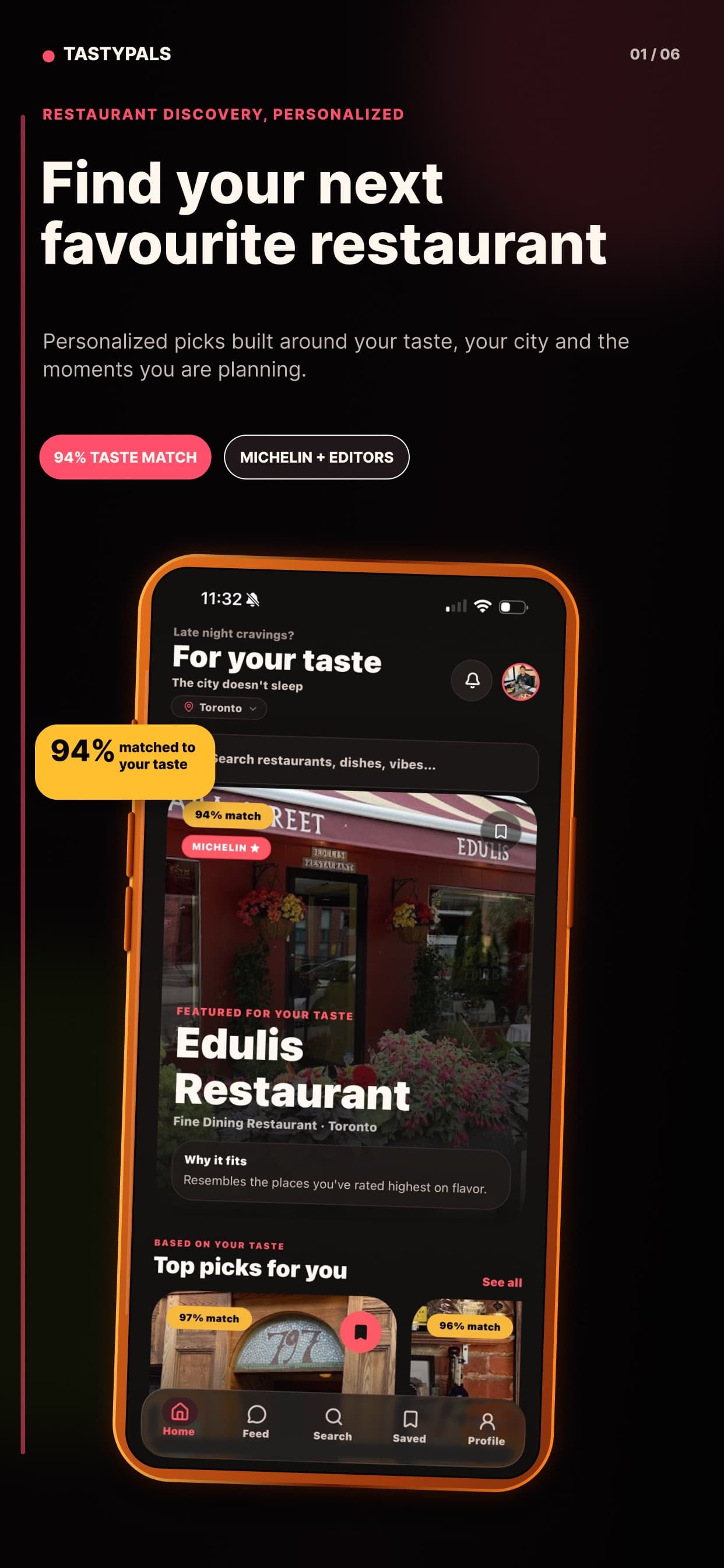
Keep the shortlist handy in the TastyPals app and find similar restaurants across San Francisco.

Personalized city picksCleaner shortlistsBuilt for iPhone and Android
TastyPalsTonight
Your taste. Our picks.
Smarter follow-through after the guide: better restaurant context, quicker narrowing, less second-guessing.
For tonight
Date night spots with warm rooms and polished service
Next step
Keep exploring in the app when you want a tighter shortlist
R & G LoungeR&G Lounge on Kearny Street operates on a kind of institutional confidence that only comes from decades of feeding Chinatown regulars, city-hall lunches, and out-of-towners who got a genuinely good tip. The dining room is bright and close-quartered, the service is direct, and the menu does not explain itself to you. What R&G has built a reputation on — in a way that flashier Cantonese rooms in this city reportedly struggle to sustain — is a serious commitment to live-tank seafood treated with technique rather than presentation. Diners who return here do so because the kitchen's priorities align with their own: quality of ingredient over atmosphere, execution over narrative. The dish the restaurant is best known for is the Live Crab with Salt & Pepper — Dungeness from the tank, reportedly fried to a lacquered, crisp shell with a salt-and-pepper crust that diners consistently describe as amplifying the crab's natural brine rather than overwhelming it. The Salt & Pepper Scallops follow the same high-heat, minimal-intervention logic. The Garlic Steamed Maine Lobster is a different register: steaming is known to concentrate the sweetness of the lobster while keeping the garlic present but measured, and longtime patrons point to it as the table's second anchor when the group is large enough to justify both. On the land side, the R&G Special Beef has a reputation for a braise that yields completely without losing structure — the kind of result that takes time and attention. The Peking Duck, carved at the table, requires advance arrangement and is treated here as exactly the kind of dish that rewards the planning. Weekend reservations are strongly advised; walk-ins at peak hours run a real risk of a long wait or no table at all. When booking, ask for the ground floor — the main room is where the actual rhythm of the place lives. Call ahead, ideally the day before, to arrange the Peking Duck. View restaurant →
Mister Jiu'sMister Jiu's makes a specific argument that deserves to be taken seriously: that Chinese-American cooking is owed the same rigorous sourcing, technique investment, and architectural dining room that San Francisco has historically reserved for French or Italian fine dining. Brandon Jew's restaurant occupies the Chinatown landmark space that once housed Four Seas, and by all accounts the room carries that history without being trapped by it — no small achievement in a neighborhood where sentiment and neglect tend to arrive together. This is a special-occasion room where the occasion is the food itself, not an anniversary obligation, and the distinction matters to how you should approach booking it. The Liberty Farms Peking Style Duck is the anchor dish and is treated as such — reportedly requiring advance booking because it is a timed production the kitchen will not rush. Diners consistently describe it as the organizing logic of the meal rather than one course among many. The Silken Mapo Tofu is known for its restraint: not a vehicle for theatrical heat, but a demonstration of how braised complexity and delicate texture can coexist when the kitchen is paying attention. The Salt & Vinegar Shrimp Chips arrive early and are understood to function as calibration — a signal of the precision that follows rather than a casual snack. The Chee Cheong Fun and Hodo Tofu Skin are the orders that separate attentive diners from those working through the obvious columns; both are cited as examples of the kitchen's commitment to technique over spectacle. Book the duck when you reserve, not as an afterthought. Request seating in the main dining room if pacing matters to you — the bar adjacency reportedly disrupts the rhythm the kitchen is building toward. Come with enough time and appetite to let the meal move at its own pace. View restaurant →
Sam Wo RestaurantSam Wo has been operating in San Francisco's Chinatown since 1907, which means it has outlasted earthquakes, the Depression, two world wars, and the particular cruelty of Bay Area real estate. That kind of institutional endurance is not accidental. By every account, the clientele reflects it: multigenerational regulars who know their order before they sit down, families cycling through the same three dishes they have been ordering for decades, and downtown workers who have quietly figured out that eating well at this price point requires knowing where the real Chinatown still functions. Sam Wo is consistently described as exactly that place — not a restaurant performing nostalgia, but one that simply never stopped. The menu centers on the kind of Cantonese comfort cooking that rewards familiarity. The Fish Jook with Chinese Donut is widely regarded as the anchor dish — a long-cooked congee that regulars specifically praise for its texture, paired with you tiao that Sam Wo also serves separately as their Famous Chinese Donuts, a combination that diners return for repeatedly. The Signature BBQ Pork Rice Noodle Rolls are consistently cited alongside the jook as a measure of the kitchen's seriousness: cheung fun of this reported delicacy requires genuine technique, and the char siu filling is described as well-caramelized without veering sweet. The Signature Raw Fish Salad and the Beef with String Beans Rice Plate round out the options for those wanting something more substantial than a congee-anchored meal. Practically speaking, breakfast and early lunch are the windows most frequently recommended by regulars, when the jook is reportedly at its freshest and the room is manageable. The Fish Jook with Chinese Donut is the dish to anchor any visit; adding the BBQ Pork Rice Noodle Rolls keeps the order focused without over-committing. Two to three dishes feeds two people at a price that will embarrass whatever you paid for delivery last week. Cash is the smarter call. View restaurant →
Mission Chinese FoodMission Chinese Food occupies a particular lane in the San Francisco dining landscape that very few restaurants manage to hold: genuinely cheap, genuinely serious, and genuinely strange in the best possible way. The room is reportedly spare to the point of austerity — cafeteria lighting, no design ambition to speak of — which, by all accounts, is entirely intentional. The concept, built around Americanized Chinese cooking run through a punk-inflected, Sichuan-leaning sensibility, wants the food to carry the full weight of the experience. The Mission neighborhood, long accustomed to places that trade on atmosphere, gets something here that inverts that logic entirely. The kitchen's reputation rests on dishes that refuse to resolve their own contradictions. The menu is consistently described as centering on mala heat — the numbing, chile-forward profile of Chengdu cooking — applied to ingredients and formats that American diners recognize from different contexts entirely. Diners and critics have long pointed to this as the restaurant's defining gesture: familiar comfort-food frameworks pushed into genuinely challenging, high-heat territory. Accounts across years of coverage suggest the kitchen does not soften its spice levels for the hesitant, and that this is a deliberate stance rather than an oversight. The menu is built for sharing widely, and regulars reportedly approach it as a group project rather than an individual order. Practically speaking, this is one of the more approachable price points for bold cooking in a city that charges heavily for far less considered meals. It is loud, unpretentious, and best suited to a table of people who want to eat across the menu rather than settle into a single safe choice. Bring four people, order more than seems reasonable, and make sure everyone at the table actually wants heat rather than merely claiming to. View restaurant →
House of NankingHouse of Nanking operates on its own terms, and that reputation has held for decades. On a block of Kearny Street where Chinatown gives way to the Financial District's lunch crowd, this compact, cash-friendly room is run by Peter Fang and his family on a philosophy that San Francisco's control-and-customize dining culture rarely tolerates: the kitchen decides. Servers will ask about preferences and dietary limits, then make the call themselves. For a city that treats a menu like a negotiating document, that arrangement is quietly countercultural. It's also, by all accounts, the point — a genuine expression of how the Fang family believes this food should be experienced rather than a gimmick engineered for novelty. The dishes that keep regulars returning are specific and consistently cited. Fang's Famous Buns are widely described as soft and yielding — a bread component meant to give rather than resist. The Spicy Melt-In-Your-Mouth Pork Belly is the kind of name a dish earns through repetition: diners report the lacquered, slow-cooked preparation and real chili presence. Fang's Crispy Honey Beef Short Rib with Bok Choy is frequently noted for the contrast between its caramelized exterior and the clean bitterness of the accompanying greens — a pairing that reads as deliberate rather than incidental. Nanking's Sesame Chicken is consistently described as pulling further from the takeout-counter archetype than first-time visitors expect, with more complexity than the category typically suggests. The Fall-Off-The-Bone Chinese BBQ Pork Ribs round out what regulars treat as the essential order, when available. Practical reality: the room is small, the tables close together, and the line forms fast. Arriving before 6:30 PM is the move that comes up in nearly every account from regulars. Come without a fixed order — let the server steer — and treat this as what it functionally is: forty-plus years of a family refining its instincts into a neighborhood institution that charges Chinatown prices for cooking that reflects considerably more than that. View restaurant →
Z & Y RestaurantZ & Y occupies a stretch of Jackson Street where ambition is rarely the point — and that's precisely what makes it worth the visit. The room is unremarkable, the service laid-back to a fault, but the kitchen, run by founder and executive chef Lijun Han, doesn't trade on atmosphere. Han cooked at the Chinese Consulate-General here and, by his own account, for two Chinese presidents; the Szechuan cooking arrives with that kind of conviction. The Fish Filet with Flaming Chili Oil ($38.95) is the dish people cross town for, and rightly — it earns its theatrics. The Tea Smoked Duck (half, $28.95) and the House Special Fresh Fish Filet Boiled in House Spicy Sauce ($26.95) hold their own. At Michelin Bib Gourmand pricing — a distinction held since 2012 — this is a moderate cheque for cooking that punches well above the room. Don't come for the occasion; come for the chili oil. On that count, Z & Y delivers reliably, which is more than most can claim. View restaurant →
Chinatown RestaurantSan Francisco's Chinatown is the oldest Chinese enclave in the country and, as a result, one of the most thoroughly tourist-facing. The neighborhood rewards patience and a willingness to look past the lacquered-duck window displays toward rooms that have been feeding the same families for decades. Chinatown Restaurant positions itself firmly in that second category — a banquet-hall-serious kitchen operating at a price level two that suggests the priorities here are at the table, not on a reservation waitlist. Regulars describe a place that keeps its head down and cooks according to the neighborhood's own long standards rather than recalibrating for whoever is newest to Grant Avenue. The menu is built around the kind of cooking that takes technique seriously at a price point that rarely does. The shrimp dumplings are consistently cited by diners for their translucent wrapper — the kind of result that depends on precise ratios of wheat starch, where the margin between gummy and torn is narrow. Steamed pork dumplings are reported to arrive tight and properly hot, the sort that punish impatience. The salt and pepper lobster is widely considered the centerpiece order: the preparation is known for a dry, crackling shell against sweet, barely-set lobster meat — a contrast that diners return for specifically. The lobster with noodles functions as the low-key repeat order, the dish regulars reportedly skip the menu to request. Candied fried banana rounds things out as a dessert that bridges a heavy meal back to the table without demanding much attention. Weekday lunch is the practical choice if you want to avoid weekend congestion on Grant Avenue. Walk-ins for two are generally accommodated before 6 p.m.; groups larger than six should call ahead. Seating toward the back of the room is said to be quieter and more settled — worth requesting when you arrive. View restaurant →

Explore next

Related guides

Get the App

Save these spots to your San Francisco list

Save these spots to your San Francisco list in the TastyPals app, then explore similar restaurants when you want a tighter shortlist for the night.

Personalized city picksCleaner shortlistsBuilt for iPhone and Android
TastyPalsTonight
Your taste. Our picks.
Smarter follow-through after the guide: better restaurant context, quicker narrowing, less second-guessing.
For tonight
Date night spots with warm rooms and polished service
Next step
Keep exploring in the app when you want a tighter shortlist