GuideUpdated July 15, 2026

15 Best Italian Restaurants in San Francisco

The 15 best italian restaurants in San Francisco, sorted by rating and curated by TastyPals editors.

The best italian restaurants in San Francisco are Scoma's Restaurant, Sotto Mare, Montesacro SoMa, and more. Start with Scoma's Restaurant if you want the strongest overall first pick.

By Giovanni Ricci15 ranked picksPublished July 15, 2026Updated July 15, 2026
15 Best Italian Restaurants in San Francisco
Google

Top picks at a glance

How the restaurants compare

How we chose

We looked for restaurants that feel like a strong fit for the guide topic, not just the most obvious names in the city. The shortlist favors rooms with clear mood, dependable pacing, and enough distinction to help someone decide faster. Read our full methodology →

Room tone

Lighting, pace, and general energy all need to support the reason someone clicked this guide.

Food fit

We favored restaurants that feel best suited for the moment, not just restaurants with broad reputation.

Useful range

The final list tries to give readers enough variation in neighborhood, price, and style to compare real options.

15 ranked picks

Scoma's RestaurantScoma's is not performing for the Marina zip code, and that restraint is the entire point. In a neighborhood where restaurants tend to treat ambition as décor, this one is reported to hold its shape differently — amber-lit in the particular way that flatters a slow evening, tables spaced wide enough that a conversation can stay private, pacing described consistently by regulars as unhurried without tipping into neglect. What research into this room keeps surfacing is that it functions well as a date restaurant not despite its straightforwardness but because of it. The space, by most accounts, carries the evening when you need it to. The kitchen's allegiance is to the Bay, and the menu moves in one direction accordingly. The Oysters a la Scoma are known for leaning into brine rather than softening it — a deliberate posture toward the water. The Lazy Man's Cioppino has built its reputation on the broth, reportedly mineral-deep and built for bread, the kind of preparation diners describe returning for specifically. The Dungeness Crab Spaghetti is consistently cited as the dish that threads the menu's sweetness-and-salt logic most directly, less a fusion exercise than a straightforward expression of what's local. Calamari Fritti appears in enough early-round orders to read as the room's default opening move. The Dungeness Crab Cakes round out a lineup that centers on Dungeness in multiple registers — which is either the whole argument for the restaurant or the whole review in a sentence. Practical intel worth noting: the room is reportedly better toward the back for atmosphere, near the window if you want to watch the street hold its pace. Thursday bookings are recommended over Friday by people who track when a room breathes easiest. Order the crab spaghetti before you make any other decisions. View restaurant →
Sotto MareSotto Mare occupies a specific and well-defended place in North Beach's social geography — the kind of Italian seafood room that regulars treat as their own and visitors have to earn through a wait. The space is famously small and consistently loud, its walls packed with the sort of nautical clutter that accumulates over decades rather than an interior designer's afternoon. That no-ceremony atmosphere appears to be entirely intentional, calibrated to match a menu that is direct, seafood-forward, and built around communal eating. The cioppino is what Sotto Mare is known for — billed on the menu as the world's best, a claim the restaurant makes with apparent sincerity and that a city of cioppino opinions has not widely moved to dismiss. Diners consistently describe a tomato-rich broth loaded with crab, clams, mussels, shrimp, and fish, and the portion is reportedly substantial enough for two. It is the kind of dish that demands bread for the broth and a bib for everything else. Beyond the cioppino, the menu centers on carefully sourced fresh seafood: the fritto misto has a reputation for restraint rather than excess, the crab pasta draws steady attention as a secondorderworthy follow-up, and oysters are available for those who want to open simply before the bigger bowl arrives. These are not afterthoughts — by most accounts the kitchen treats the full menu with the same care it gives its flagship — but the cioppino is plainly the organizing principle of a meal here. Practical reality: the room fills quickly and does not take reservations in the way larger restaurants do, so arriving early is the standard advice from regulars. Plan to share the cioppino, build around it with a fritto misto or the crab pasta, and leave room for the bread that the broth will make necessary. View restaurant →
Montesacro SoMaMontesacro SoMa is doing something genuinely specific in a neighborhood that usually defaults to tech-casual or expense-account Italian: it's a pinseria, which means the entire operation is organized around pinsa romana — the oval, cracker-edged Roman flatbread that reportedly predates pizza by centuries and is known for a lighter, more complex fermented crumb than most SF diners have encountered. This isn't a pizza joint with a coat of paint. The dough philosophy is the whole argument, and by most accounts the SoMa room wears that conviction without apology. It's built for the crowd that wants a drink, something delicious and shareable, and zero ceremony — the anti-tasting-menu diner who still actually cares what's on the plate. The Italian Market Selection is the clearest expression of what Montesacro is reaching for: a curated spread the menu frames as a salumeria-style arrangement of cured meats with real provenance, cheeses that go beyond the mozzarella default, and accompaniments that are meant to earn their place on the board rather than fill space. At a price level two in a city where two drinks and a shared plate can eclipse forty dollars before tax, that kind of restraint and intentionality is worth flagging. Diners consistently describe it as the right anchor while pinsa makes its rounds — the kind of thing you order early and graze through rather than treat as an afterthought. On the practical side: the kitchen is known to pace the flatbreads deliberately, so getting your order in early is the move if you don't want an empty wine glass and nothing to show for it. Lunch and early dinner tend to run more relaxed; late on weekends the room fills with post-work spillover from the neighborhood. Front seats get the street energy; deeper tables are better for actual conversation. Groups should book ahead — walk-ins for two on a weeknight are reportedly workable. View restaurant →

Get the App

Save these spots to your San Francisco list

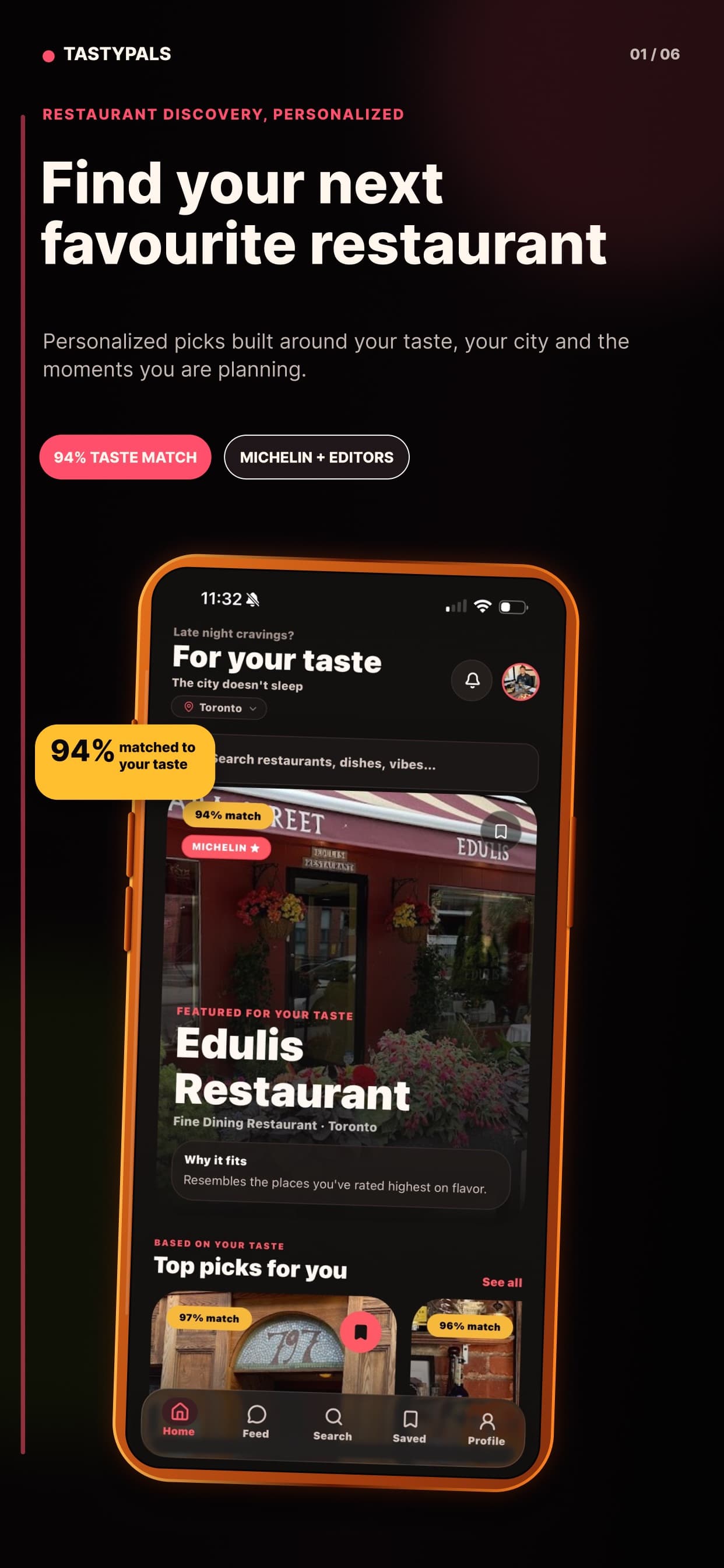
Keep the shortlist handy in the TastyPals app and find similar restaurants across San Francisco.

Personalized city picksCleaner shortlistsBuilt for iPhone and Android
TastyPalsTonight
Your taste. Our picks.
Smarter follow-through after the guide: better restaurant context, quicker narrowing, less second-guessing.
For tonight
Date night spots with warm rooms and polished service
Next step
Keep exploring in the app when you want a tighter shortlist
Trestle RestaurantAt fifty-two dollars for four courses, Trestle makes an argument that most San Francisco restaurants at twice the price cannot convincingly counter. The prix fixe format is not merely a pricing mechanism — it is a structural commitment. Every diner arrives for the same meal, which means the kitchen is optimizing for a single, rotating selection rather than hedging across an expansive à la carte list. That selection reportedly turns over within the span of a single week, a discipline that demands real seasonal thinking and keeps the kitchen from settling into comfortable repetition. The Italian-leaning menu centers on dishes that, by consistent account, reflect technical confidence without the kind of showmanship that tends to inflate check sizes elsewhere. The squid ink conchiglie is among the items diners and critics point to most often — a preparation that signals the kitchen's comfort with classical pasta technique and restraint in equal measure. The seared black cod and the pork schnitzel round out what is known as a menu where each course carries its weight rather than functioning as filler between marquee plates. This approach, recognized by the Michelin Bib Gourmand, suggests a kitchen that understands value not as a concession but as a governing philosophy. The setting — a century-old brick building on Jackson Street in the Chinatown district — gives the room a character that reportedly reads as accumulated rather than manufactured. This is a restaurant that functions as well on a midweek dinner as it does for a quiet occasion, which is its practical advantage over more narrowly positioned special-event rooms. Reservations are strongly advised; the Bib recognition ensured that availability tightened considerably. Book at least a week out and go in without a fixed agenda for the menu — it will have changed since anyone last described it to you. View restaurant →
Tony's Pizza NapoletanaTony's Pizza Napoletana is not auditioning for the role of North Beach atmosphere piece. The room is bright, reportedly crowded in the way that places with a single-minded purpose tend to be, and the energy described by regulars reads less like a seductive evening and more like a convening of people who came specifically to eat pizza — and feel completely correct about that decision. In a neighborhood that trades heavily on Italian-American nostalgia and dim candlelight, Tony's has built its reputation on technical discipline rather than mood engineering, which, in San Francisco's current restaurant landscape, is its own kind of confidence. What the menu is known for is not one pizza but a theology of pizza — multiple regional styles, each reportedly fired at different temperatures in purpose-built ovens. Tony Gemignani holds multiple World Pizza Championship titles, and by all accounts that credential shapes the kitchen's entire orientation: Neapolitan, New York, Detroit, and Sicilian preparations coexist here not as a crowd-pleasing hedge but as a genuine study in how dough, heat, and fermentation behave differently across traditions. Diners and critics consistently frame the multi-style approach as the whole point — ordering a single pie is widely considered a strategic error. The kitchen's commitment to that range at a mid-tier price point is, by reputation, almost unreasonably rare. Practically: the wait on weekend evenings is something people mention with the weary specificity of lived experience, so weekday visits are the standard advice. Come with someone willing to range across styles and share; the room rewards appetite and curiosity more reliably than it rewards a slow, lingering evening. Budget roughly $30–$40 per head with drinks, and go in having already decided to order more than you think you need. View restaurant →
The Italian Homemade CompanyNorth Beach has never needed another red-sauce tourist trap, and The Italian Homemade Company appears to understand that with rare clarity. The room's reputation is built around a single, focused premise: pasta made fresh and made daily is the argument — not the décor, not theatrical candlelight, not a hovering wine program. By all accounts, the lighting is honest, the tables close, and the operation runs with the concentrated efficiency of somewhere that knows exactly what it is. In a neighborhood that increasingly confuses performance with quality, that specificity reads as a genuine stance rather than a marketing decision. The menu centers on a short roster of pasta that diners consistently point to as the reason to return. The Tagliatelle Bolognese is reportedly the dish that sets the tone — broad egg-pasta ribbons paired with a meat sauce described across accounts as slow-built and unhurried. The Pappardelle Pesto draws notice for a brighter, herb-forward profile that works against the richness of the pasta rather than with it. The Tortellini is known for a filling-to-dough ratio that suggests genuine attention to proportion — the kind of balance that's easy to fumble and harder to praise until it's absent. The Burrata Salad functions as a clean, dairy-forward opener that regulars tend to recommend as a proper prologue to the heavier plates. The Meat Lasagna carries a reputation for being the room's fullest argument in a single baking dish: straightforward, correctly proportioned, and apparently the one order that summarizes what the place is doing. Practically: the room fills fast, and the queue is reportedly a reliable feature on weeknight evenings, so arriving early is worth planning around. Counter-adjacent seating is said to carry the better energy. For two people at this price point, The Italian Homemade Company is widely regarded as one of North Beach's more honest pasta propositions — spend the budget on the pasta itself and leave the additions alone. View restaurant →
Roma AnticaRoma Antica holds a specific position in the Marina's dining landscape — one that declines, apparently on principle, to chase whatever the neighborhood decided it wanted this season. The room is built around return visits rather than debut moments: warm lighting that flatters without flattering itself, unhurried pacing in the Italian mode, tables spaced for actual conversation. By reputation, this is a place that understands the date-night contract. Diners consistently describe evenings that feel longer than the clock says they were, which is precisely the point. The menu plants its flag in Roman and Italian coastal tradition, and the dishes that honor that commitment most fully are the ones worth seeking out. The Burrata alla Caprese is reportedly served as it should be — generous without spectacle, cool and yielding at the center. The Gamberi al Limone is known for its brightness, citrus pulling shrimp back toward the sea rather than drowning it in richness. The Carbonara — the test any Roman-leaning kitchen must pass — is described by regulars as properly emulsified, egg folded rather than scrambled, pepper present enough to mean something. The Coda alla Vaccinara, oxtail braised with tomato and cocoa in the old Roman style, is the dish the menu seems built toward: a commitment dish, for a table that has settled in. For groups inclined to share something more substantial, the Stinco d'Agnello carries that same patient, slow-cooked register. Practical intel: the room reportedly fills without overcrowding on Thursday and Friday evenings, making those the nights to book if you want the atmosphere at its best — present but not pressured. Arrive before 7, take the back of the room if you can get it, and let the Gamberi al Limone close out the savory course before dessert earns its moment. View restaurant →

Explore next

Related guides

Same guide in other cities

Get the App

Save these spots to your San Francisco list

Save these spots to your San Francisco list in the TastyPals app, then explore similar restaurants when you want a tighter shortlist for the night.

Personalized city picksCleaner shortlistsBuilt for iPhone and Android
TastyPalsTonight
Your taste. Our picks.
Smarter follow-through after the guide: better restaurant context, quicker narrowing, less second-guessing.
For tonight
Date night spots with warm rooms and polished service
Next step
Keep exploring in the app when you want a tighter shortlist